
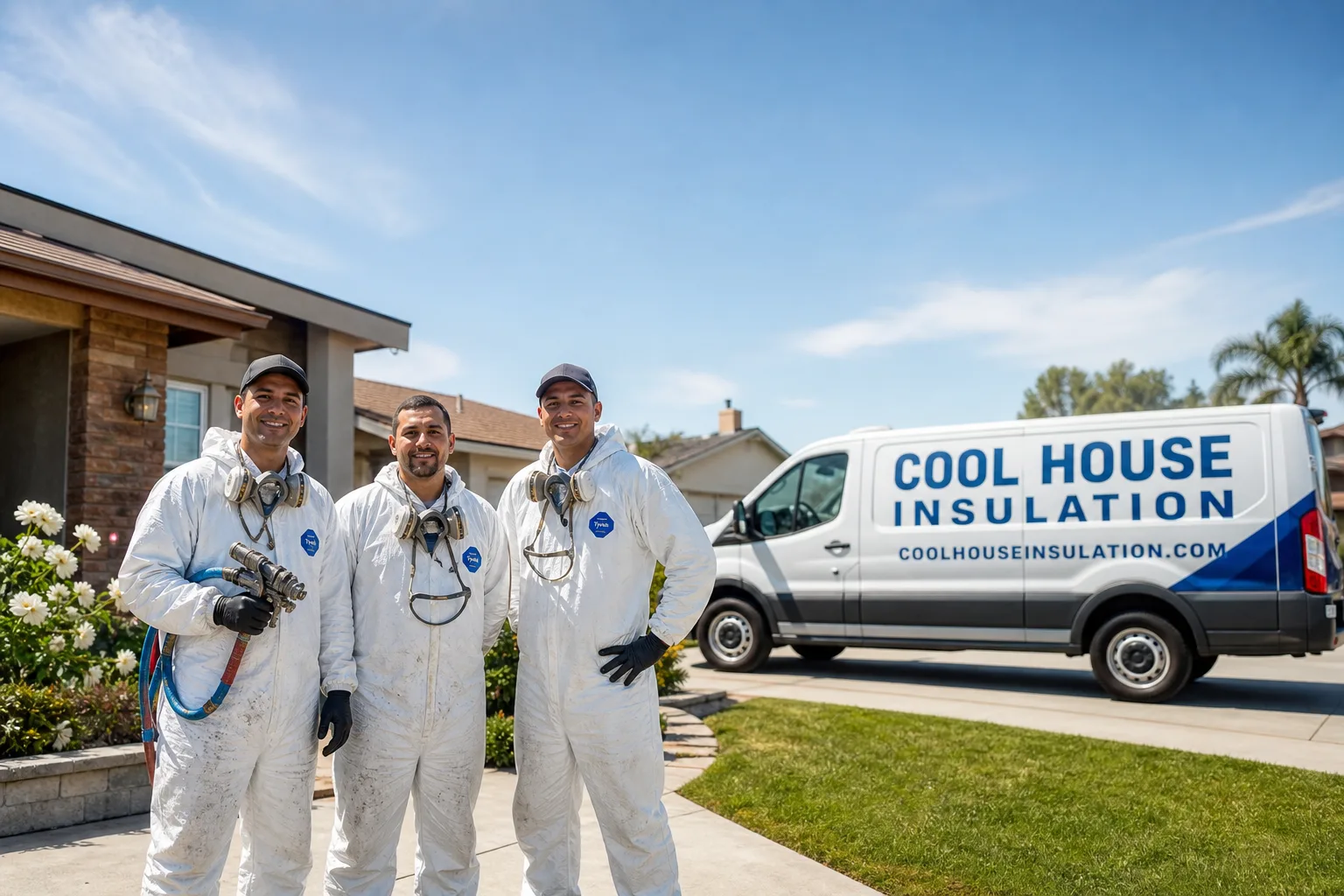
Fast, Reliable Spray Foam Insulation Across Lakewood
Spray foam insulation in Lakewood typically costs $3.50 to $7.50 per square foot for open-cell and $5.00 to $9.50 for closed-cell, with most whole-attic jobs in 90712 and 90713 landing between $4,800 and $11,500. That’s the honest range, and we’ll give you a line-item quote before any work starts. Our crews run from La Palma into Lakewood within 40 to 60 minutes most days, which matters when you’ve got a open wall cavity and knob-and-tube wiring sitting there exposed. Call (855) 341-7810 and we’ll get someone out to look at your specific 1950s tract home, not a generic estimate pulled from a national table.
We know Lakewood’s housing stock better than most insulation companies because we work on it constantly. The original Lakewood Park and Lakewood Village homes off South Street and around Mayfair Park were built between 1948 and 1955 with 2×4 walls and, in a lot of cases, no wall insulation at all. That changes how we bid, how we prep, and what we find when the drywall comes off. This isn’t the same job as insulating a new build in Cerritos or a remodel in Long Beach. It’s a retrofit on a 75-year-old house with its own quirks.
Why Cool House Insulation Is Lakewood’s Preferred Spray Foam Insulation Company
Homeowners on Candlewood Street and around Bolivar Park call us because we’ve already done their neighbor’s house. Lakewood’s tract layout means we’ve insulated the exact same floor plan a dozen times: the “Ranch” off Del Amo, the “Cape Cod” up near Harvey Way, the “Barbecue” plans clustered around Lakewood High. When a crew shows up and already knows where the original wall cavities sit and where the attic access hatch is likely located, the job goes faster and the quote comes back tighter.
Our crews have pulled back lathe and plaster on hundreds of Lakewood walls. That’s not bragging, it’s just what happens when you focus on one market for years. We know that on the 90714 side near the Long Beach border, marine layer moisture sits in the wall cavities differently than it does blocks farther inland. We also know which houses still have original sawdust insulation from 1953 and need a moisture check before any foam gets sprayed. You want a contractor who’s seen it before, not one who’s surprised when the wall is opened up.
Noel Carrasco, the owner at Cool House Insulation, handles every Lakewood estimate personally. He’s walked hundreds of these attics. When he tells you what your house needs, it’s because he’s inspected the framing, the wiring, the existing insulation, and the venting with his own eyes.
Spray Foam Insulation Contractors in Lakewood
Spray Foam Insulation Contractors in Lakewood don’t do one-size-fits-all work, and this market doesn’t allow it. On a 1952 ranch on Faust Avenue, the job involves opening the exterior wall cavities, checking for settled fiber or sawdust, verifying the condition of any old wiring, then applying open- or closed-cell foam against the sheathing and letting it expand into every stud bay. The foam air-seals and insulates in one pass, which matters when the original house never had a real vapor barrier or air barrier to begin with. Expect a full wall cavity retrofit in Lakewood to run $6,200 to $13,800 depending on square footage and foam type, with attic-only jobs starting around $4,800.
Wall Cavity Retrofit Steps
We start by opening a small inspection window into one exterior wall. If original batts have settled to the bottom plate or if we find knob-and-tube wiring, we pause and bring in a licensed electrician before any foam leaves the rig. Once the cavity is clear and dry, we spray foam against the sheathing and let it cure. The result is a wall assembly that blocks the salt-damp air that moves through Lakewood’s older homes, and the house stops losing conditioned air through every stud bay.
When Your House Tells You It’s Time
Rooms that run eight to ten degrees warmer than the thermostat reading in the afternoon are a common complaint in original Lakewood tract homes. So is furniture that feels cold against an exterior wall in January. Those aren’t just comfort annoyances, they’re signs the wall cavities don’t hold any consistent thermal boundary. Spray foam addresses that directly by filling the entire cavity, not just laying fiberglass batts inside it.
Spray Foam Attic Insulation in Lakewood
Spray Foam Attic Insulation is a different conversation in Lakewood than it is in most Southern California cities, because of the original attic design. Most 1948 to 1955 Lakewood Park homes were built with unvented or minimally vented attics. The low-pitch gable roofs bake under the summer sun, and that heat radiates right down through the ceiling drywall into the living space below. Closed-cell foam applied directly to the underside of the roof deck costs $5,000 to $11,800 for a typical 1,100 to 1,500 square foot Lakewood ranch, and it converts that hot, damp attic into a conditioned buffer zone.
Why the Roof Deck, Not the Attic Floor
In a vented attic, you’d insulate the floor and let the attic breathe. Lakewood’s original homes often don’t have enough venting for that approach, so we bring the thermal boundary up to the roofline. Spraying the roof deck stops heat before it ever enters the attic space. That’s especially valuable in the flat-to-low-pitch gable style dominant along Bellflower Boulevard and Candlewood Street, where roof deck temperatures hit 140 degrees on a sunny August afternoon.
Moisture and Marine Layer Considerations
Because Lakewood sits in the South Bay coastal plain, the marine layer pushes damp air through those unvented attics for most of the spring and early summer. Spraying foam over sheathing that’s already holding moisture or over old sawdust that acts like a sponge is how you get condensation and mold. We run a moisture meter across the roof deck and check the existing insulation before a single pass of foam. If the sheathing is damp, we address the source first, then spray.
Trusted Brands We Service in Lakewood
We’re authorized installers for Icynene and Demilec spray foam, plus we work with Knauf and CertainTeed for hybrid approaches where the homeowner wants open-cell in the walls and fiberglass batts somewhere else. That’s the advantage of carrying eight manufacturer lines instead of pushing one. You don’t have to fight a salesman’s bias, and you get foam selected for your Lakewood home’s actual problem, not for whatever the contractor happens to inventory. For most original tract homes in 90711, 90712, 90713, and 90714, we recommend Icynene open-cell in wall cavities for its expansion characteristics and Demilec closed-cell on the roof deck for its moisture resistance. If you’re on the sustainability side, we can also discuss a Rockwool or GreenFiber hybrid. The point is the recommendation comes from the building, not the brand.
Common Spray Foam Insulation Problems We See in Lakewood Homes
- Settled sawdust and 1950s batts under the foam line. When we open a wall cavity on a 1951 Cape Cod and find original sawdust insulation collapsed to the bottom plate, spraying foam directly over it traps the old material against the sheathing and holds moisture tight. We remove or remediate first.
- Knob-and-tube wiring inside stud cavities. Lakewood Park homes off Del Amo and Arbor Road still carry original ceramic-tube wiring. Encasing live knob-and-tube in foam can overheat the conductors. It’s a wiring-safety stop-work before we spray, every single time.
- Salt-air corrosion eating garage components. Homes within a few miles of the Long Beach boundary get coastal fog, and the air carries enough salt to corrode garage door springs, hinges, and opener chains within three to five years. When a garage door binds, it can crack the foam seal at the garage-house interface.
- Damp attic sheathing. The marine layer doesn’t just wet the grass, it drives moisture into unvented attics. Foam applied over damp sheathing fails to bond and can delaminate within a year. Moisture readings come before the spray gun, always.
Pricing for Spray Foam Insulation in Lakewood, CA
Open-cell spray foam in Lakewood runs $3.50 to $7.50 per square foot for wall cavities and $2.75 to $5.25 for attic floors. Closed-cell runs $5.00 to $9.50 per square foot, and it’s what we recommend for roof decks and rim joists where moisture resistance is the priority. A full wall retrofit on a 1,200 square foot original tract home typically lands between $6,200 and $12,500. A garage ceiling foam job in 90712 or 90713 runs $1,600 to $3,400. The big swing factors: how much old insulation needs to be removed first, whether knob-and-tube remediation is required, and how accessible your attic framing is. Call (855) 341-7810 for a free, line-item estimate from the same crew that will do the work. No national franchise pricing, no surprise change orders.
We Also Serve Cities Near Lakewood
Our crews cover Signal Hill, Bellflower, Long Beach, and Paramount from the same La Palma base. If you’ve got a 1950s tract home in one of those neighboring cities, the retrofit patterns are similar enough that we’d be glad to give you the same spray foam assessment. You can read more about our process on the main Spray Foam Insulation page, or see everything we do specifically for Spray Foam Insulation in Lakewood customers.
Serving Lakewood, CA — Our Local Coverage Area
We’re based in the Lakewood area and know this community well. Use the map below to see our service coverage — if you’re nearby, we can almost certainly help.
FAQs About Spray Foam Insulation in Lakewood
No, not if the foam is applied after we verify the sheathing is dry and the existing insulation isn’t holding moisture. Lakewood’s marine layer does push damp air into unvented attics, so we run moisture readings on the roof deck before any foam touches it. We also check the wall cavities for settled sawdust or old batts that act like sponges. If the assembly starts dry and the foam is installed to the right depth, the house gets tighter without trapping vapor inside the wall. Call (855) 341-7810 and we’ll walk your attic with a moisture meter before you commit to anything.
We stop the foam work and bring in a licensed electrician to assess and remediate the circuit. Encasing live knob-and-tube in foam creates a fire hazard because the insulation holds heat against the conductors. On a Lakewood Park “Ranch” plan off Del Amo Boulevard, our crew found original sawdust settled to the bottom plate and live knob-and-tube buried in the same cavity. We isolated the circuit, brought in an electrician to clear the wiring, then sprayed closed-cell foam against the sheathing. The job takes a little longer, but you end up with a safer wall assembly and an insulation plan that passes inspection. Call (855) 341-7810 to talk through what your home might have in its walls.
Yes, it affects the garage door hardware more than the foam itself. Coastal fog carries salt that corrodes steel springs, hinges, rollers, and opener chains within three to five years. When the door binds or operates unevenly, it can crack the foam seal at the garage-house interface and let conditioned air escape. We replace corroded components with galvanized springs and stainless hinges, and we run nylon rollers that don’t grind against salt-pitted tracks. The foam job holds up fine, but the door has to operate cleanly or the seal won’t last. Call (855) 341-7810 for a garage assessment in the 90712 and 90713 zip codes.
No, we remove the old sawdust or settled batt material before spraying. Lakewood’s original 1948 to 1955 homes often still carry sawdust insulation from the original build, and it settles to the bottom plate over seventy years. Spraying foam directly over material that holds moisture and blocks proper adhesion leads to condensation and mold. We clear the cavity, verify it’s dry, then apply foam to the sheathing. That’s the difference between a 20-year foam job and one that fails in two. Call (855) 341-7810 and we’ll put eyes on your attic before anyone picks up a hose.
Closed-cell spray foam lasts 30 to 50 years in Lakewood’s coastal climate when installed over dry sheathing and protected from UV exposure. Fiberglass batts in the same conditions typically sag or settle within 10 to 15 years, especially in unvented 1950s attics where the marine layer drives moisture into the material. Open-cell foam lasts 20 to 30 years. The wildcard is always installation quality: foam sprayed over damp sheathing fails early, and that’s the number one coastal-climate failure we see. Call (855) 341-7810 to get a moisture assessment and an honest lifespan estimate for your specific house.
Written by Noel Carrasco, Owner at Cool House Insulation, serving Lakewood and the surrounding South Bay communities.