
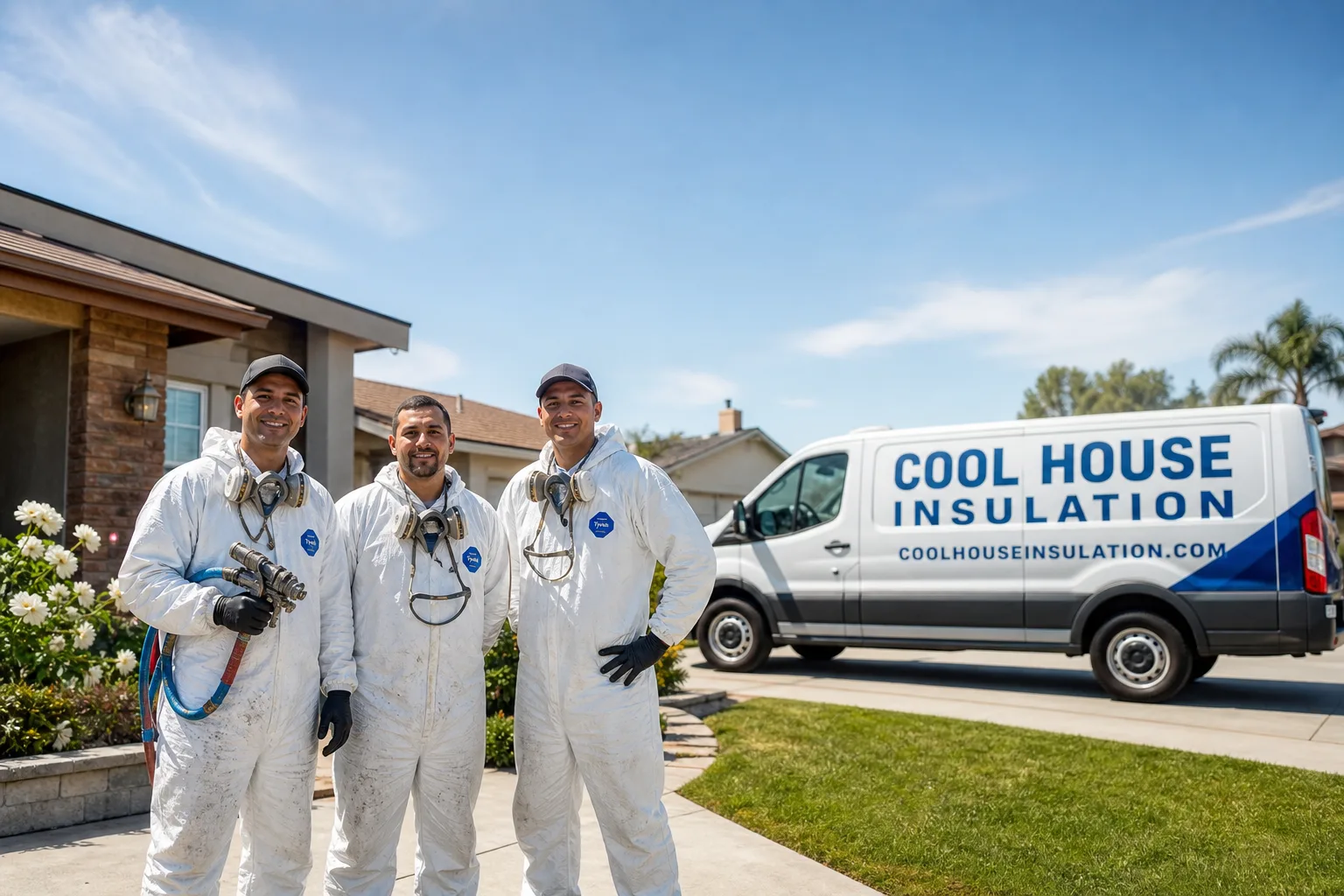
Fast, Reliable Spray Foam Insulation Across Long Beach
Spray foam insulation in Long Beach typically costs $2,100 – $6,800 depending on the area being foamed, and most jobs are completed in a single day. The real Long Beach question isn’t whether spray foam works – it’s which foam you need when the marine layer is pressing damp salt air into your walls every morning. Closed-cell foam with its built-in vapor retarder is the answer for most pre-war homes in 90803 and 90804, and that’s the kind of specific call we make every week. Call (855) 341-7810 and we’ll do the same for your house.
Why Cool House Insulation Is Long Beach’s Preferred Spray Foam Insulation Company
Our crews work ocean-adjacent neighborhoods from Belmont Shore to Cambodia Town weekly, not occasionally. We know that a 1920s bungalow on a narrow lot in 90803 has a different wall cavity than a 1950s tract house in 90806, and we plan the spray foam job accordingly. We carry both Icynene and Demilec full suites, so the recommendation you get is the right product for your wall assembly – not whichever drum we happen to have on the truck. We’re led by Noel Carrasco, and his rule is simple: diagnose first, then choose the foam.
Long Beach homeowners call us because we don’t treat a salt-air garage in Naples the same way we’d treat a dry inland attic in Carson. That local read is the difference between a foam job that performs for twenty years and one that’s trapping moisture behind the drywall by year two. Full Spray Foam Insulation coverage across every Long Beach zip code we serve, same-day estimates, and a crew that already knows where to park in Alamitos Beach. Call (855) 341-7810 for a free estimate.
Garage Spray Foam Insulation in Long Beach
Garage Spray Foam Insulation in Long Beach homes runs $1,400 – $3,200 for a typical attached two-car garage, ceiling and shared wall included. The salt air off the San Pedro Bay corrodes exposed hardware and turns an uninsulated garage into a humidity sponge that leaches damp into the rest of the house. We spray closed-cell foam on the ceiling and the wall shared with the living space, but only after we’ve checked springs, hinges, and fasteners for corrosion – because foam applied over rusting metal won’t hold.
Ceiling and Shared Wall Work
The garage ceiling is where most Long Beach heat and humidity transfer happens. A conditioned garage ceiling with closed-cell foam stops the damp crawl that otherwise seeps into the room above. We also foam the wall between garage and living space, which kills both the temperature swing and the exhaust smell transfer that older pre-war garages in 90805 and 90804 are known for.
Salt-Air Surface Prep
Before we spray anything in a Long Beach garage, we inspect the hardware. Salt air eats hinges, springs, and even foam substrate over time, and a poorly prepped surface means premature delamination. We use galvanized or coated replacements where needed and make sure the foam bonds to clean, dry metal – not the flaking rust that coastal garages accumulate in a single winter.
Closed Cell Spray Foam Insulation in Long Beach
Closed Cell Spray Foam Insulation in Long Beach typically runs $3,000 – $6,800 for a full attic or roof deck application, depending on square footage and depth. Closed-cell is the workhorse in this city because it carries its own vapor retarder, which is the single best defense against the marine layer that keeps near-shore wall cavities damp ten months of the year. For homes in 90802, 90803, and 90804 – many of them 1920s bungalows with no existing vapor control – this one factor usually decides the job.
Roof Deck and Attic Applications
We spray closed-cell on the underside of roof decks to create what’s called a conditioned attic. In Long Beach, that means the attic stops breathing in the ocean at night and stops dripping on your insulation by morning. It’s the right fix for unvented or poorly vented attics that are common in pre-war construction around Carroll Park and Rose Park.
Vapor Retarder and Moisture Control
Closed-cell foam at two inches or more acts as a Class II vapor retarder. That matters more in Long Beach than R-value alone ever will, because dry heat isn’t the enemy here – persistent damp is. Once the foam seals the cavity, the condensation problem on cool surfaces disappears, and so does the musty smell that older coastal homes get into their drywall.
Trusted Brands We Service in Long Beach
We install spray foam from Icynene and Demilec, both of which we’re authorized to carry and both of which we stock for Long Beach jobs. When the right call is blown-in, we use GreenFiber recycled-content insulation, and when a particular attic calls for batts, we draw from CertainTeed rather than forcing foam where it isn’t the best answer. The brand follows the diagnosis, not the other way around. That’s the whole point of being a multi-brand Long Beach installer instead of a single-product franchise, and it means faster turnaround when we already have the right material on hand for your neighborhood’s typical construction.
Common Spray Foam Insulation Problems We See in Long Beach Homes
- Marine-layer damp embedded in fiberglass batts. We regularly pull sagging, moldy batts out of 1920s bungalow attics in Belmont Shore and Bluff Heights. Spraying foam over them without removal locks the moisture in and feeds the mold.
- Unvented attics that collect condensation. Many pre-war Long Beach attics were never vented properly. Cool damp marine air moves in overnight, hits the underside of the roof deck, and condenses – before any insulation goes in, ventilation gets assessed.
- Rusting garage hardware under fresh foam. Salt air corrodes springs, hinges, and fasteners along surface streets near Ocean Boulevard. Foam applied over that corrosion fails early, so we address the metal before the spray.
- Wrong foam choice for the wall assembly. Open-cell foam in a damp 90803 wall without a vapor plan is a recipe for hidden moisture. We see it all the time, and the fix starts with admitting the first install got the product wrong for the conditions.
Pricing for Spray Foam Insulation in Long Beach, CA
What you’ll pay in Long Beach depends on which cavity we’re foaming and how big it is. Garage ceiling spray foam runs $1,400 – $3,200. Closed-cell for an attic or roof deck runs $3,000 – $6,800. Rim joist work in an older crawlspace typically lands at $900 – $1,800. What moves the number is access – crawlspaces in 90805 are tighter than attics in 90835 – plus depth, surface prep, and whether we’re removing failed fiberglass first. Estimates are free, and the number we quote is the number you’ll see on the invoice. Call (855) 341-7810 and we’ll walk your house and give you an exact figure before any work starts.
We Also Serve Cities Near Long Beach
Our crews cover Long Beach and the surrounding communities of Spray Foam Insulation in Long Beach, Signal Hill, Lakewood, Carson, and West Carson. If you’re just over the 405 or the 710 and wondering whether we’ll come to you, the answer is yes. Call (855) 341-7810 and we’ll schedule a walkthrough wherever you are.
Serving Long Beach, CA — Our Local Coverage Area
We’re based in the Long Beach area and know this community well. Use the map below to see our service coverage — if you’re nearby, we can almost certainly help.
FAQs About Spray Foam Insulation in Long Beach
Yes, spray foam works extremely well in Long Beach when you choose the right type – and closed-cell is the right type for most coastal homes because its integral vapor retarder stops the marine layer from moving damp into the wall cavity. The wrong choice is open-cell foam without a vapor plan in an older 90803 bungalow, which can trap moisture rather than manage it. We diagnose before we recommend.
Because the salt air off the bay corrodes open-cell foam’s moisture handling capacity over time, while closed-cell foam acts as its own vapor barrier and bonds tightly even in higher-humidity coastal conditions. It stops the garage from pulling damp into the house every morning. The same job pays for itself in years, not decades, when it’s done with the right product. Call (855) 341-7810 and we’ll spec your garage correctly.
No, and we won’t do it. Spraying over damp or moldy fiberglass traps the moisture and turns a visible problem into a hidden one inside your walls. The batts come out first, the cavity gets dried and checked, and only then does the foam go in. On a 1920s bungalow in Belmont Shore, our crew found exactly that – sagging, moldy batts in an unvented attic – and the fix was removal, air sealing, and closed-cell foam on the roof deck. The homeowner reported a drier, fresher space within a week.
Installation works year-round here because Long Beach doesn’t get freezing temperatures, but the marine layer pushes us to schedule surface prep and curing time carefully. We avoid spraying when surfaces are visibly wet from overnight condensation, which usually means late morning starts in 90804 and 90803 rather than dawn. The foam cures reliably once the day’s air has moved through the space.
Yes, you need a ventilation assessment before adding spray foam, because the unvented attics common in pre-war Long Beach houses collect condensation on cool surfaces during damp mornings. Sometimes the right play is a conditioned attic with closed-cell foam rather than more venting, and sometimes it’s adding proper intake and exhaust first. We’ll tell you which applies to your house after we see it. For an exact quote, call (855) 341-7810 – estimates are free.
Written by Noel Carrasco, Owner at Cool House Insulation, serving Long Beach and surrounding communities.