
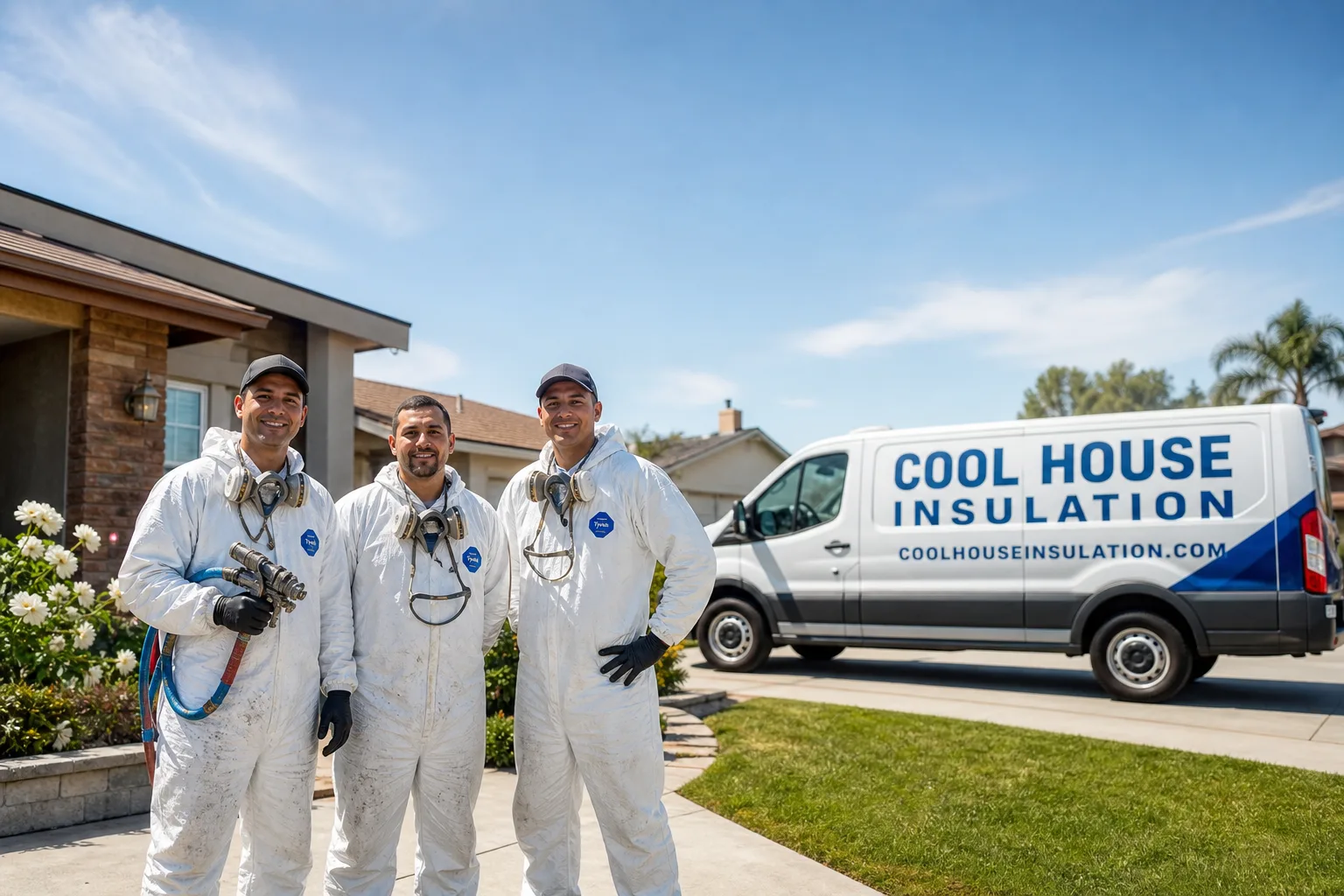
Fast, Reliable Spray Foam Insulation Across Stanton
Spray foam insulation in Stanton typically costs between $2,100 and $6,800 depending on the scope, with most attic projects landing in the $2,400 to $4,200 range and full wall retrofits running higher. We reach Stanton homes from our La Palma location in about 15 minutes, which means same-day Reflectix service in Stanton assessments are the norm for most of 90680. If your mid-century tract home has original rock-lath walls and an uninsulated attic that’s been baking under inland Orange County heat, call Noel at (855) 341-7810 and we’ll tell you exactly what your house needs.
Stanton’s housing stock isn’t like newer Orange County developments. Most homes off Beach Blvd and Knott Ave were built in the 1950s and 60s, and what’s inside the walls and attics reflects that era. We’ve worked enough of these houses to know exactly what we’re going to find before we even open the attic hatch. That local knowledge is why Stanton homeowners call us for Spray Foam Insulation work year after year.
Why Cool House Insulation Is Stanton’s Preferred Spray Foam Insulation Company
Walk down any street in the older tracts of Stanton and you’ll see the same thing: single-story ranch homes with low roofs, attached garages, and small side yards. What you can’t see is what’s above the ceiling and behind the walls. We know because we’ve been in those attics and those wall cavities. The original insulation in most of these homes has settled to a fraction of its original R-value, and in many cases there was never any insulation in the walls at all.
We’re not a single-brand shop pushing one product. Our crew carries Icynene and Demilec spray foam systems, which are the two names we trust most for open- and closed-cell applications in Stanton’s specific housing conditions. That means we match the foam to the problem, not the other way around. A 1958 ranch with uninsulated shared garage walls needs a different approach than a 1970s apartment building with a vented attic, and we’ll tell you that straight.
Noel Carrasco started running insulation crews because he saw too many homes getting the wrong product for the wrong reason. That diagnostic-first approach is why Stanton homeowners keep our number. We show up when we say we will, we look at what’s actually there, and we give you a straight answer. Call (855) 341-7810 for a free estimate and you’ll see what that looks like in practice.
Spray Foam Attic Insulation in Stanton
Spray Foam Attic Insulation in Stanton usually means retrofitting homes that were built with minimal attic insulation, often just a thin layer of fiberglass that’s now compacted by decades of HVAC work and electrical retrofits. In the tracts off Beach Blvd, we regularly measure original attic insulation at R-8 or less, when this climate zone calls for R-38 or higher. Closed-cell foam applied directly to the roof deck converts the attic into a semi-conditioned space, which is exactly what a hot inland Orange County summer demands. For Stanton attics, closed-cell roof deck work typically runs $3,800 to $6,500, while an open-cell floor application runs $1,900 to $3,400.
Why Original Attic Insulation Fails Here
Stanton summers push attic temperatures past 140 degrees on a regular day. That heat doesn’t just make your AC work harder; it bakes the life out of what little insulation was installed in the 50s and 60s. Fiberglass batts that started at R-11 settle to R-6 or R-8 within a decade, and once they’ve been disturbed by decades of rewiring and duct replacement, they’re doing almost nothing. We see this pattern on every block in 90680.
What Closed-Cell Foam Does That Batts Can’t
Closed-cell spray foam makes the attic an air barrier, not just a thermal barrier. That matters in Stanton because the temperature difference between the attic and living space in August is enormous, and any air movement through the ceiling carries heat down into the house. Sealing the roof deck with closed-cell stops that air movement cold. It also adds structural strength, which matters for older roof decks that have weathered 60-plus summers.
Spray Foam Wall Insulation in Stanton
Spray Foam Wall Insulation in Stanton is most common in homes where the original wall cavities are empty, which describes the majority of 1950s and 60s tract houses in this city. Those original rock-lath and plaster walls were built with no insulation at all. The solution for remodel projects is either removing sections of plaster and spraying closed-cell foam into open cavities, or drilling and injecting low-expansion foam behind existing walls. For a typical 1,200 to 1,500 square foot Stanton ranch, full wall spray foam retrofits run $3,200 to $6,800 depending on access and how much existing plaster needs to be removed.
Coastal Air and Shared Garage Walls
Stanton’s 1950s and 60s tract homes often have uninsulated garages that share walls with living space, and when we spray foam those shared walls, we have to account for something older insulation contractors overlook. The garage side is where salt air and humidity from coastal influence first attack the building envelope. Stray moisture that reaches foam-injected fasteners and anchors will corrode them within a few years, causing the foam to separate from the substrate. We spec corrosion-resistant fasteners on every Stanton garage wall project for exactly that reason.
Rock-Lath Walls and Foam Adhesion
Original rock-lath and plaster walls present a specific problem for spray foam: plaster dust and trapped moisture from the original construction era sit inside the cavities and on the back of the lath. If you spray foam directly against that surface without proper prep, adhesion fails and the foam delaminates within a few years. Our crew cleans and preps those surfaces before spraying, which is a step generic insulation companies skip, and it’s the difference between a foam job that lasts five years and one that lasts the life of the house. On a 1962 ranch off Beach Blvd, we sprayed Icynene into the shared garage wall of a home whose original fiberglass batts had settled to R-8. Our tech first removed corroded drywall screws and replaced them with stainless fasteners because the salt air had eaten through the originals, then applied closed-cell foam to seal air leaks and insulate the wall to R-13.
Trusted Brands We Service in Stanton
We carry Icynene and Demilec spray foam systems because both brands make open- and closed-cell products that hold up to the specific conditions in Stanton: hot attics, salt air exposure, and older wall cavities with adhesion challenges. We also install CertainTeed and GreenFiber products for Stanton homeowners who want complementary batt or blown-in work in other parts of the house. Because our shop is in La Palma, we can pull materials and get to any Stanton job site fast. Call (855) 341-7810 to talk through which product fits your home’s construction.
Common Spray Foam Insulation Problems We See in Stanton Homes
- Foam adhesion failure on original rock-lath walls. Plaster dust and decades of trapped moisture create a surface that foam can’t bond to without proper prep. We clean and prime those cavities first, which is a step that prevents delamination within the first few years.
- Corroded fasteners in garage and crawlspace applications. Salt air from the coast accelerates corrosion on standard screws and anchors used in foam installations. We use stainless fasteners on any Stanton project where the foam meets a garage ceiling or shared wall, because replacing the hardware later costs more than the foam itself.
- Off-gassing and shrinkage in unvented attics during summer heat. Low-density open-cell foam that isn’t formulated for high-heat attics will shrink and gap after a few Stanton summers. We spec closed-cell or high-heat-rated open-cell products for roof deck applications to avoid this.
- Settled and disturbed original fiberglass beneath new foam. If you don’t remove or address the old batts before spraying, they continue to settle and create gaps that undermine the new insulation. We assess the existing attic condition before recommending any foam application.
Pricing for Spray Foam Insulation in Stanton, CA
Open-cell attic applications in Stanton run $1,900 to $3,400 for a typical 1,200 square foot attic. Closed-cell roof deck work runs $3,800 to $6,500 because it uses more material at a higher board-foot cost. Wall cavity spray foam retrofits run $3,200 to $6,800 depending on whether we’re working through open walls during a remodel or drilling and injecting through existing plaster. Garage ceiling and rim joist work is smaller, typically $900 to $2,200. What moves the price is access: tight attics off Beach Blvd with low clearance, plumbing and electrical obstructions, and how much old material has to be removed first. We give free estimates on every Stanton project, so call (855) 341-7810 and Noel or one of our techs will come out, measure, and give you an exact number before any work starts.
We Also Serve Cities Near Stanton
Our crew works throughout central and west Orange County. In addition to Stanton, we regularly handle spray foam projects in Garden Grove, Cypress, Westminster, and Midway City. If you’re in one of those cities and dealing with the same mid-century construction issues, call (855) 341-7810 and we’ll treat your house with the same level of attention.
Serving Stanton, CA — Our Local Coverage Area
We’re based in the Stanton area and know this community well. Use the map below to see our service coverage — if you’re nearby, we can almost certainly help.
FAQs About Spray Foam Insulation in Stanton
Yes, but not without preparation. The original rock-lath and plaster in Stanton’s 1950s tract homes carries plaster dust and trapped construction-era moisture that prevents proper foam adhesion. We clean, dry, and prime those cavity surfaces before spraying. If a contractor says they’ll spray directly onto unprepared rock-lath, the foam will likely delaminate within a few years. Call (855) 341-7810 and we’ll assess your walls before quoting.
Salt air accelerates corrosion on the metal fasteners and anchors used in foam installations, especially in garages and shared walls where moisture from coastal influence first contacts the building envelope. Standard screws can corrode and fail within years, causing the foam to separate from the substrate. We use stainless or coated fasteners on every Stanton project where salt air exposure is a factor. That detail is built into our estimates, not an add-on.
Spray foam in a shared garage wall will not stop salt air from reaching the garage door hardware itself, because the hardware sits in ambient air. What foam does is seal the air leaks and moisture pathways between the garage and living space, which reduces the amount of humid, salt-laden air that enters the house and the wall cavity. For the hardware itself, nylon rollers and galvanized springs are the right fix. Our focus is the wall cavity and the fasteners we install.
Closed-cell foam sprayed to the roof deck achieves R-21 to R-28 depending on depth, and it creates an air barrier that the existing fiberglass never provided. Open-cell on the attic floor typically gets us to R-38 to R-49 at a lower cost. Both are a massive improvement over the R-8 to R-10 batts we routinely measure in Stanton’s original tract homes. For an exact recommendation, call (855) 341-7810 for a free attic inspection.
It depends on where the foam is going. For roof deck applications, the old floor batts can stay in place, though we often remove them for a cleaner air barrier detail at the eaves. For floor applications, yes, we remove the old batts first, because leaving settled fiberglass under new foam creates gaps that reduce the system’s performance. We’ll tell you which approach your attic needs after we see it. Estimates are free, so call (855) 341-7810.
Written by Noel Carrasco, Owner at Cool House Insulation, serving Stanton since day one.