Insulation Company in Monrovia, CA
Blown in insulation is the most common retrofit we handle in Monrovia, and the reason boils down to the housing stock: dozens of early-1900s Craftsman bungalows and post-war tract homes near Old Town have wall cavities and attic floors that were never insulated, or hold a thin, settled layer of fiberglass that stopped performing years ago. Loose fill gets into the irregular spaces those old plaster and balloon-frame walls create without ripping rooms apart. If your energy bills spike from June through October while upstairs rooms stay warm until midnight, call us at (855) 341-7810 for a straight read on what’s in your walls now and what it would take to fix it.
Why Monrovia Homes Are Different
Monrovia sits at the base of the San Gabriel Mountains, and that position creates a thermal pattern flat cities in the San Gabriel Valley don’t experience. Days in July and August run hot, often above 95°F along the 91016 flats, but once the sun drops behind the foothills the canyon air rolls down and pulls temperatures back 20 degrees or more. An under-insulated attic absorbs all that afternoon heat and radiates it down into bedrooms exactly when the outside air is finally cooling off. The result is a house that fights its own climate: the AC runs into the evening while windows are open downstairs. We plan attic retrofits here for cooling load first and evening heat retention second, which changes how much material goes in and where it gets placed.
Older neighborhoods near Old Town Monrovia, along streets like Lime, Ivy, and the hillside edges of Norumbega, have a lot of 1920s and 1930s buildings with plaster walls and original framing. Those homes often have no wall insulation at all, and balloon-frame construction means heat moves vertically through open stud bays from the crawlspace to the attic. Retrofitting them is not a simple blow-and-go job. The technician has to think about airflow, knob-and-tube wiring if it’s still present, and whether dense packing cellulose makes sense or whether attic work alone will deliver the comfort improvement you’re after. Homes up against the Angeles National Forest boundary in 91016 face another layer: Santa Ana winds, ember exposure, and wildland-urban interface rules that put fire-resistant insulation choices on the table, not just R-value.
Our Main Monrovia Services
Most Monrovia homeowners call us about one of two things: an attic that’s running hot and driving up cooling costs, or a major remodel or addition where the walls are open and foam makes sense. Here’s how each plays out in this city.
Attic Insulation in Monrovia
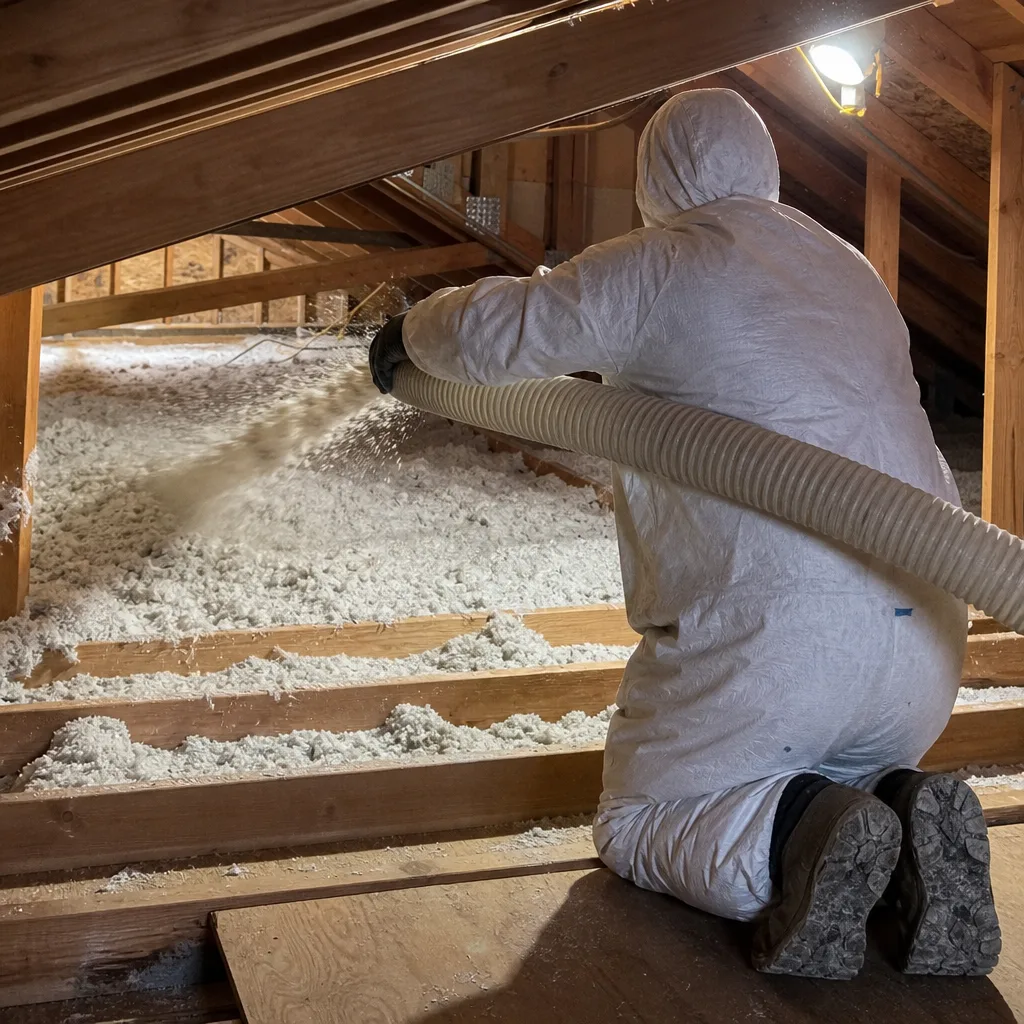
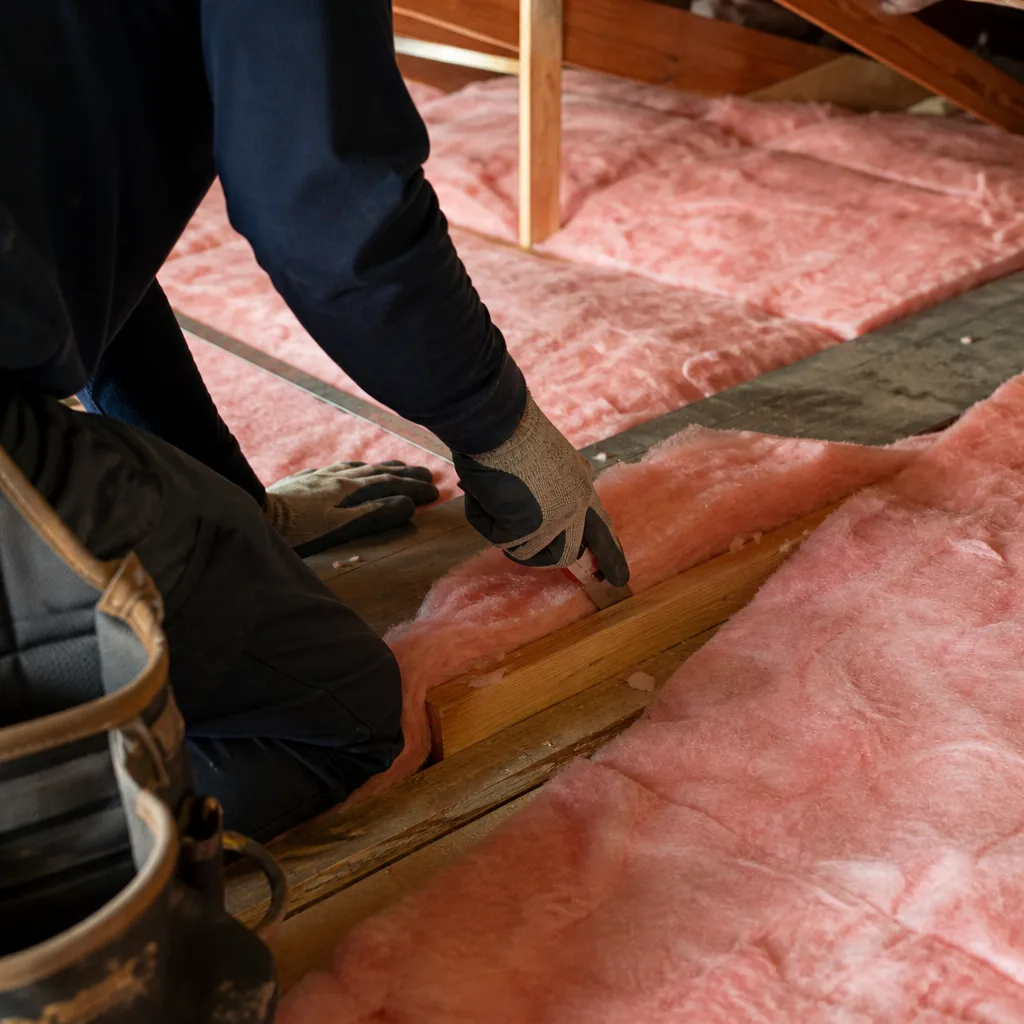
Attic work in Monrovia usually starts with a complaint we know well: the second floor won’t cool down, even with the AC running. In older 91016 homes, what we typically find is two or three inches of compacted insulation that’s doing almost nothing, and sometimes nothing at all above bedrooms that face the afternoon foothill sun. We measure the existing depth, check for gaps around the attic hatch and recessed lights, then recommend either blown-in fiberglass or cellulose to bring the attic floor up to the right level for this climate. Homes near the canyon edge get an extra conversation about ember-resistant material choices. Same crew, same day in most cases. You can read the full breakdown on our Attic Insulation in Monrovia page.
Spray Foam Insulation in Monrovia
For homes under renovation or new builds sloping up toward the Angeles National Forest, spray foam is often the correct call, and we carry both Icynene and Demilec so we can match open-cell or closed-cell foam to the actual building assembly rather than defaulting to one product. Closed-cell foam earns its keep in Monrovia’s garage conversions and attic rooms because it adds structural rigidity and controls moisture that swings between dry Santa Ana stretches and damp canyon mornings. Open-cell foam does a better job in sound reduction between floors, which matters in the denser post-war tracts where homes sit close together. See our Spray Foam Insulation in Monrovia page for costs and a deeper look at where foam fits in this city’s housing.
What happens when you call
- 1
A real person answersNo phone trees — you reach a local pro.
- 2
You get an upfront price rangeHonest numbers before anyone is dispatched.
- 3
A background-checked tech heads outLicensed & insured, dispatched right away.
- 4
You approve before work beginsNothing starts until you say go.
Blown In Insulation in Monrovia
Blown in insulation is our most-requested retrofit in Monrovia because it solves the city’s core problem without major demolition: loose fill travels through a hose into finished walls and sloping attic cavities, filling the gaps that make 1920s plaster homes and 1950s tract houses expensive to heat and cool. We typically install blown fiberglass or cellulose in a single day, working inside the home’s existing structure. For a full look at the method, materials, and applications, see our Blown In Insulation guide. Here’s what the work looks like when it’s scoped for a Monrovia house.
Cellulose Insulation
Signs you need it
Drafts around baseboards or a faint chill near interior walls in winter, especially in pre-1950 Monrovia homes, usually means wall cavities are empty or nearly so.
What it costs in Monrovia
Blown cellulose for walls and attics in Monrovia typically runs $1.10 to $3.50 per square foot depending on depth and access.
How we do it
We cut or drill small access points in each stud bay or attic floor, feed dense-packed cellulose through a calibrated blower hose, confirm the fill pressure, then patch and texture the openings to match.
Blown In Attic Insulation
Signs you need it
If your upstairs stays hot long after sunset between June and October, or the AC runs constantly while the downstairs feels fine, your attic floor insulation is probably too thin or uneven.
What it costs in Monrovia
Blown-in attic insulation in Monrovia generally falls between $1,850 and $7,200 depending on attic size, access, and the R-value we need to hit.
How we do it
We seal the small gaps that let conditioned air escape, install baffles at the eaves to preserve attic ventilation, then blow fiberglass or cellulose across the attic floor to a consistent depth with a depth gauge.
Blown In Cellulose Insulation
Signs you need it
Rooms that overheat in summer and feel drafty in winter despite a working HVAC often point to settled or missing insulation in the wall cavities of older Monrovia homes.
What it costs in Monrovia
Settled or shallow wall insulation can be topped or dense packed with blown cellulose, typically $0.90 to $2.30 per square foot of wall area.
How we do it
We test the existing fill level to see if it’s settling or holding up, then blow cellulose through the same access points to bring cavities up to a full, even fill that blocks air movement.
Blown In Fiberglass Insulation
Signs you need it
An attic with patchy, thin, or disturbed fiberglass batts often reads as rooms that are hard to keep comfortable and utility bills that climb every summer.
What it costs in Monrovia
Blown-in fiberglass for a typical Monrovia attic runs $0.50 to $1.20 per square foot, installed to the correct depth for the San Gabriel Valley climate.
How we do it
We remove or top the old batts where they’re no longer performing, then blow loose-fill fiberglass across the attic floor with a machine-calibrated flow and raked finish to the target R-value.
Loose Fill Insulation
Signs you need it
Odd-shaped attics, sloped ceilings, and hard-to-reach nooks in Craftsman and hillside homes often need loose fill because batts can’t conform to the cavity shape.
What it costs in Monrovia
Loose fill insulation for irregular or sloped Monrovia attic spaces is generally $1.00 to $3.00 per square foot installed.
How we do it
We run the blower hose to the farthest corner and work back toward the access point, layering material to an even depth and checking coverage with a depth gauge before we call it done.
What Blown In Insulation Costs in Monrovia
| Item | Typical range in Monrovia |
|---|---|
| Blown-in attic insulation (fiberglass) | $1,850 – $7,200 per attic |
| Blown-in cellulose (walls) | $1.10 – $3.50 per sq ft |
| Blown-in fiberglass (attic floor) | $0.50 – $1.20 per sq ft |
Can you blow insulation into finished walls without harming the plaster?
Yes. We drill small access holes from the exterior or interior, blow dense-packed cellulose or fiberglass in, then patch the holes. In Monrovia’s older plaster homes we work carefully to match the surface texture and keep damage to a minimum.
How long does a blown-in insulation job take in Monrovia?
Most attics and wall retrofits finish in one day. Larger or multi-story homes near the foothills may take a day and a half. Call (855) 341-7810 with your square footage and we’ll give you a realistic time window.
Brands We Service in Monrovia
We install products from eight manufacturers and stock the materials Monrovia jobs actually use. Owens Corning and Johns Manville fiberglass cover most attic retrofits, and GreenFiber cellulose handles wall dense-packing and fire-conscious hillside work. Turnaround is short because our our brands are sourced through regular supply runs, not special orders.
Pricing for Insulation Company in Monrovia, CA
| Service | Typical range in Monrovia |
|---|---|
| Blown-in attic insulation (fiberglass) | $1,850 – $7,200 per attic |
| Blown-in fiberglass (attic floor) | $0.50 – $1.20 per sq ft |
| Blown-in cellulose (walls) | $1.10 – $3.50 per sq ft |
| Blown-in cellulose (attic floor) | $0.90 – $2.30 per sq ft |
| Loose fill insulation (irregular attics) | $1.00 – $3.00 per sq ft |
| Spray foam (open-cell, attic) | $2.00 – $4.50 per sq ft |
| Spray foam (closed-cell, walls) | $3.00 – $6.50 per sq ft |
| Attic insulation removal | $1.00 – $2.50 per sq ft |
What pushes a Monrovia quote up is usually access: a tight attic hatch, a steep hillside lot that makes the hose run longer, or an older home with knob-and-tube wiring that needs to be worked around. We quote a fixed price before any material goes in, so the number we give you is the number you pay.
Neighborhoods We Serve in Monrovia
Our trucks run regular routes through the 91016 and 91017 ZIP codes, and we know the older blocks around Old Town as well as the hillside streets climbing toward the Angeles National Forest. Typical response time from call to completed estimate is two to three business days across Monrovia.
- Old Town Monrovia
- Norumbega hillside
- North Monrovia (91016)
- Monrovia flats near Huntington Drive
- Canyon Park area
Service Area – Cities Near Monrovia
We also work across the foothill and valley communities that share Monrovia’s climate and housing patterns. That includes Mayflower Village, CA directly to the west, Duarte, CA along the Huntington Drive corridor, and the estate hills of Bradbury, CA. To the east, Arcadia, CA presents similar mid-century tracts and ranch homes with the same attic retrofit needs.
Serving Monrovia, CA — Our Local Coverage Area
We’re based in the Monrovia area and know this community well. Use the map below to see our service coverage — if you’re nearby, we can almost certainly help.
FAQs About Insulation Company in Monrovia
Most retrofit insulation, including blown-in and spray foam in existing attics and walls, does not require a permit in Monrovia. New construction or major remodels that change the building envelope fall under the city’s building permit process. We’ll tell you before we start if your project triggers anything with the city.
Yes. For homes near the wildland-urban interface along the foothills, we recommend materials and assemblies that resist ember intrusion and meet WUI guidance. Blown-in cellulose with fire-retardant treatment and properly baffled attic venting are common choices we discuss on foothill jobs.
Scheduling depends on scope and material, but most Monrovia attic and wall retrofits can start within a week or two of your estimate. Call (855) 341-7810 and we’ll give you a firm start window, not a vague promise.
What happens when you call
- 1A real person answersNo phone trees — talk to a local insulation pro.
- 2You get an upfront price rangeHonest numbers before anyone is dispatched. No surprises.
- 3A background-checked tech heads outLicensed & insured, typically same-day.
- 4You approve before work beginsNothing starts until you say go.
What Monrovia Customers Say
"Found and sealed a gap around the chimney chase that was basically an open chimney to the attic."
— Claudia Hernandez"Work is good and the house is noticeably more comfortable. There was insulation debris left in the hall closet under the attic access that I had to clean up."
— Adam Whitaker"Attic was at maybe R-11 from the 1970s and blown in over the top would have just buried the problem. They removed the old material, air sealed the top plates and penetrations first, then blew in to R-49. The upstairs is a completely different house in August."
— Ernesto Reyes