
Insulation Company in Lomita, CA
Blown in insulation is the retrofit Lomita homes are built for. Most houses here went up between 1945 and 1965, when wall cavities were left empty and attics got a thin skim of fiberglass that’s long since settled into uselessness. The marine layer keeps summers mild, but those same coastal conditions mean indoor comfort swings between damp-chilly mornings and Santa Ana afternoons. Cool House Insulation has served Lomita since 2015, and we match the right material, not the one we happen to carry. Call (855) 341-7810 for a free estimate.
Why Lomita Homes Are Different
Lomita’s housing stock is mostly small post-WWII tract bungalows on 5,000 to 6,000 square foot lots, built for open-window living and cheap energy. Original wall cavities are either empty or stuffed with paper-thin insulation that has degraded over six or seven decades. Room additions from the 1970s and 1980s complicate things further, since their insulation levels rarely match the original structure. The 90717 ZIP feels the full effect of the South Bay marine layer: mornings stay damp and cool well into June, then an October Santa Ana can spike indoor temperatures in uninsulated walls within hours. That’s why the trade in Lomita is retrofit work, not new-construction specs. Noise control matters too, with Lomita Blvd and Pacific Coast Highway traffic bleeding into bedrooms on the western edge of town. Homes near the Lomita Railroad Museum and along the older blocks often reveal completely empty wall cavities during remodels, which makes blown-in retrofit the natural add-on when walls are already open.
Our Main Lomita Services
Most Lomita homeowners call us about two things: attics that leak conditioned air and walls that were never insulated in the first place. Here’s how each plays out in this city’s specific housing stock.
Attic Insulation in Lomita
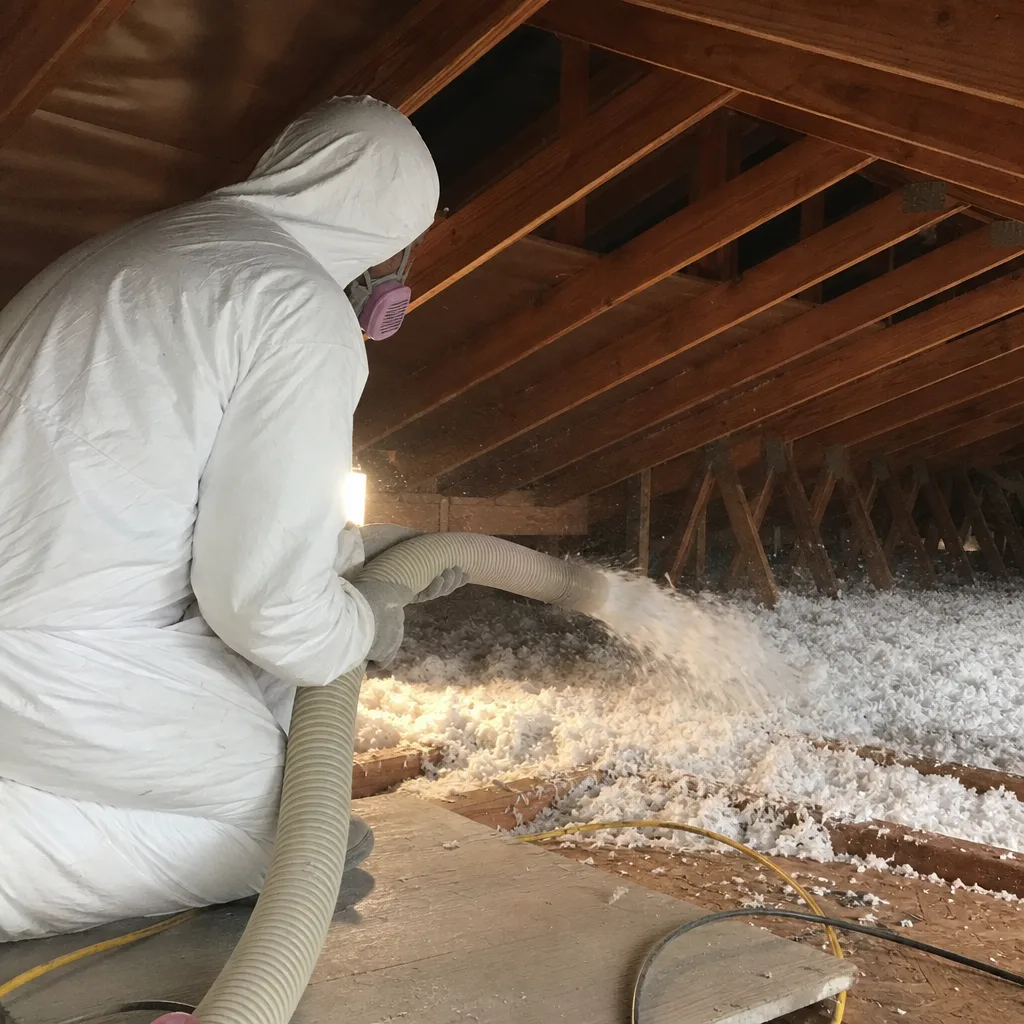
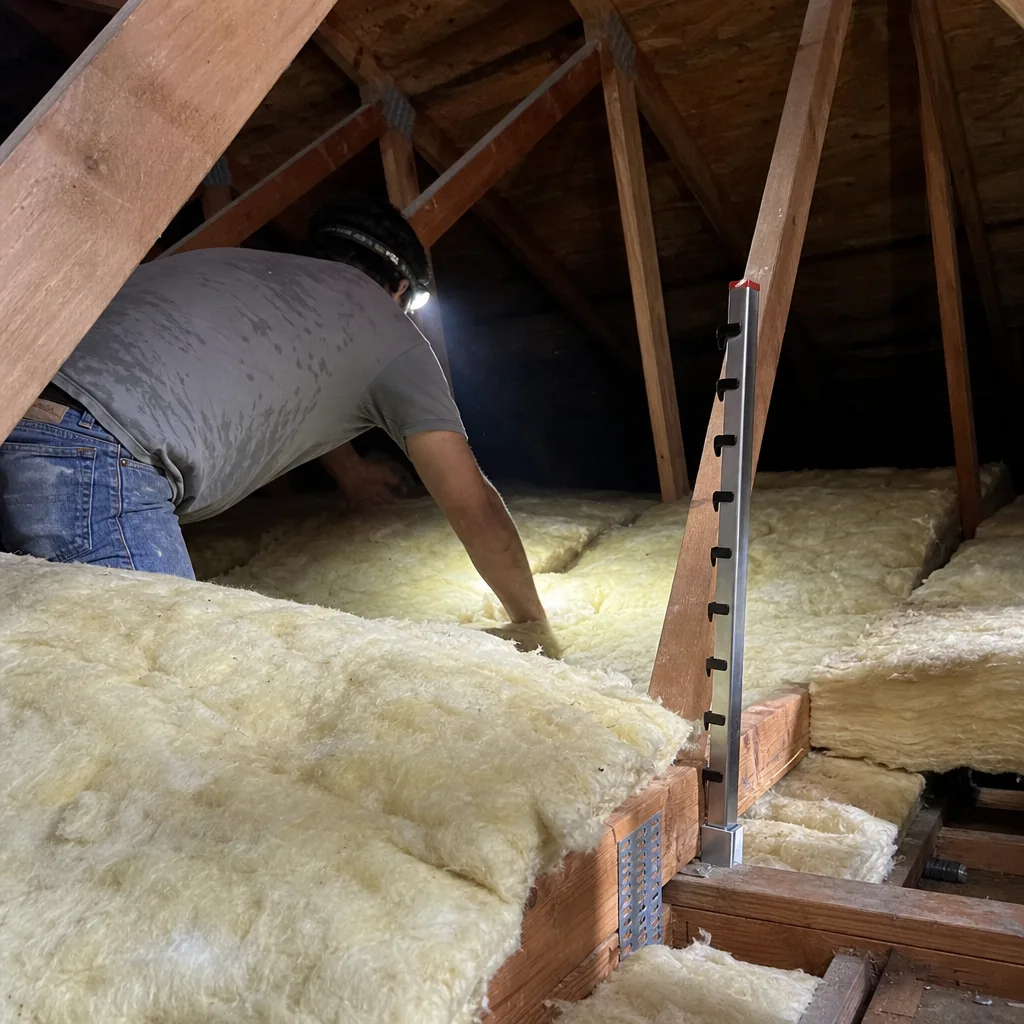
Lomita attics on 1940s and 1950s bungalows typically have original insulation that has settled to an R-value well below anything useful. The marine layer means moisture gets trapped up there, and a thin attic blanket just makes it worse by holding damp air against the ceiling. We inspect what’s there, measure the settled depth, and recommend either topping off with blown-in material or removing and replacing entirely. Deepening attic coverage is usually the single fastest way to stop heat loss in a Lomita bungalow. Read the full breakdown here: Attic Insulation in Lomita.
Spray Foam Insulation in Lomita
Spray foam earns its keep in Lomita on homes with crawlspace issues, vaulted ceilings, or additions that never got insulated properly. Closed-cell foam offers air sealing and moisture resistance in one pass, which matters when the marine layer keeps subfloor spaces damp from March through July. Open-cell foam works well for interior sound control, especially on walls facing Lomita Blvd or PCH. For the complete guide: Spray Foam Insulation in Lomita.
What happens when you call
- 1
A real person answersNo phone trees — you reach a local pro.
- 2
You get an upfront price rangeHonest numbers before anyone is dispatched.
- 3
A background-checked tech heads outLicensed & insured, dispatched right away.
- 4
You approve before work beginsNothing starts until you say go.
Blown In Insulation in Lomita
Blown in insulation is the most practical retrofit method for Lomita’s 1940s and 1950s tract bungalows because it reaches wall cavities and attic floors without demolition. Dense-packed cellulose or loose-fill fiberglass can be installed through small holes drilled in exterior stucco or interior drywall, then patched cleanly. Homes near the Lomita Railroad Museum and older 90717 blocks frequently show empty wall cavities during kitchen and bath remodels, and blow-in retrofit at that moment saves opening walls a second time. It’s the method we recommend most often here because it fits what Lomita homes actually are: old, small, and never insulated in the first place. For a deeper look at how the method works across different applications, see Blown In Insulation.
Cellulose Insulation
Signs you need it
Rooms that swing hot in Santa Ana conditions and cold during marine-layer nights, combined with original 1950s drywall that’s never been opened, usually point to empty wall cavities.
What it costs in Lomita
Dense-packed cellulose wall retrofit in Lomita typically runs $1.50 to $3.50 per square foot of wall area, with most 900 to 1,200 square foot bungalows landing between $2,700 and $6,300 total.
How we do it
We drill access holes in each stud bay, dense-pack GreenFiber cellulose to the correct density, patch the holes, and leave the walls ready for paint.
Blown In Attic Insulation
Signs you need it
An attic floor with original insulation settled to R-4 or less, or visible daylight gaps around ceiling fixtures, means conditioned air is escaping straight through the top of the house.
What it costs in Lomita
Blown-in attic insulation in Lomita averages $1,800 to $4,500 for a typical 900 to 1,200 square foot bungalow, depending on existing depth and target R-value.
How we do it
We air-seal penetrations, install baffles where needed, then blow loose-fill fiberglass or cellulose to the R-value that makes sense for a coastal South Bay climate.
Blown In Fiberglass Insulation
Signs you need it
An attic with even coverage but no air sealing, or walls where blown fiberglass is preferred for its moisture resistance in damp marine-layer conditions, call for this material.
What it costs in Lomita
Blown fiberglass attic work in Lomita runs $1,200 to $3,800 depending on square footage, while wall retrofit with blown fiberglass averages $2,200 to $5,500 for a small bungalow.
How we do it
We calculate the loose-fill density needed for your target R-value, then blow Owens Corning or Johns Manville fiberglass through hoses into the cavity or attic floor.
What Blown In Insulation Costs in Lomita
| Item | Typical range in Lomita |
|---|---|
| Dense-packed cellulose wall retrofit | $2,700 – $6,300 (whole house) |
| Blown-in attic insulation | $1,800 – $4,500 |
| Blown-in fiberglass wall retrofit | $2,200 – $5,500 |
How long does blown in insulation take in Lomita?
Most Lomita bungalows finish in a single day, including wall drilling, blowing, and patching. Attic-only jobs are typically done in half a day. Call (855) 341-7810 for a schedule estimate.
Is blown in insulation worth it for Lomita’s mild climate?
Yes, because comfort here isn’t about extreme heat, it’s about damp mornings, traffic noise from Lomita Blvd and PCH, and inconsistent indoor temperatures. Blown-in material addresses all three at roughly half the cost of spray foam.
Brands We Service in Lomita
We install products from eight insulation manufacturers, which means the recommendation is based on your house, not our inventory. In Lomita we regularly work with Demilec spray foam, GreenFiber cellulose, Owens Corning fiberglass, and Johns Manville batts. See the full lineup at our brands.
Pricing for Insulation Company in Lomita, CA
| Service | Typical range in Lomita |
|---|---|
| Dense-packed cellulose wall retrofit | $2,700 – $6,300 |
| Blown-in attic insulation | $1,800 – $4,500 |
| Blown-in fiberglass wall retrofit | $2,200 – $5,500 |
| Attic insulation (batt or blown) | $1,500 – $3,800 |
| Spray foam attic floor | $2,800 – $6,500 |
| Spray foam wall injection | $3,000 – $7,200 |
| Spray foam rim joist / crawlspace | $1,400 – $3,200 |
| Cellulose wall retrofit (standard) | $2,000 – $4,800 |
Prices in Lomita climb when walls have plaster instead of drywall, when access requires working around room additions, or when old wiring needs to be addressed before blowing. We quote upfront and the number we give you is the number on the invoice.
Neighborhoods We Serve in Lomita
Cool House Insulation works throughout the 90717 ZIP and the surrounding South Bay. We know the difference between a 1948 bungalow near the railroad tracks and a 1960s apartment building on the PCH corridor, and we plan each job accordingly.
- Lomita Railroad Museum area
- Lomita Blvd corridor
- Western 90717 residential blocks
- Pacific Coast Highway east side
- South Lomita near Torrance border
Service Area – Cities Near Lomita
We serve Lomita and the surrounding South Bay communities with the same brand-agnostic approach. Homeowners from Torrance, CA, Rolling Hills Estates, CA, West Carson, CA, and Manhattan Beach, CA call us for the same reason: multi-brand insulation selection without the single-product pitch.
Serving Lomita, CA — Our Local Coverage Area
We’re based in the Lomita area and know this community well. Use the map below to see our service coverage — if you’re nearby, we can almost certainly help.
FAQs About Insulation Company in Lomita
We schedule most Lomita estimates within 2 to 3 business days, and installation often lands within a week of the estimate. Smaller attic jobs can sometimes be done sooner. Call (855) 341-7810 to check current scheduling.
Standard insulation retrofit in existing walls or attics does not require a Lomita building permit. If the work is part of a larger remodel where walls are already open, your general contractor’s permit will cover the insulation scope.
Yes. Lath and plaster walls need a slightly different drilling and patching approach than drywall, and we’ve done enough Lomita homes from the 1940s and 1950s to know exactly how to leave the patch clean and paintable.
If your Lomita home is drafty, damp, or noisy and the walls have never been opened, call (855) 341-7810. We’ll tell you what’s actually inside those cavities, what it would cost to fix, and which material makes sense for your house. Free estimates, no product pitch.
What happens when you call
- 1A real person answersNo phone trees — talk to a local insulation pro.
- 2You get an upfront price rangeHonest numbers before anyone is dispatched. No surprises.
- 3A background-checked tech heads outLicensed & insured, typically same-day.
- 4You approve before work beginsNothing starts until you say go.
What Lomita Customers Say
"Found and sealed a gap around the chimney chase that was basically an open chimney to the attic."
— Claudia Hernandez"Work is good and the house is noticeably more comfortable. There was insulation debris left in the hall closet under the attic access that I had to clean up."
— Adam Whitaker"Attic was at maybe R-11 from the 1970s and blown in over the top would have just buried the problem. They removed the old material, air sealed the top plates and penetrations first, then blew in to R-49. The upstairs is a completely different house in August."
— Ernesto Reyes