
Emergency Attic Insulation Near Me: What La Palma Homeowners Should Do First
If you’re searching for emergency attic insulation in La Palma, stop and read this first. The insulation is almost certainly the victim, not the cause, of whatever sent you to your phone. Replacing it before finding what destroyed it guarantees you’ll be replacing it again, and that’s a bill nobody should pay twice.
Here’s the short answer: a true attic insulation emergency in La Palma almost never starts with insulation. It starts with water, rats, or an HVAC failure that damaged the insulation secondarily. Call (855) 341-7810 and we’ll walk through what you’re seeing. If you’d rather not DIY the diagnosis, that’s what we’re here for.
The Triage Sequence: Is This Actually an Emergency?
Most calls we get labeled “emergency attic insulation” fall into two buckets. The first bucket is a health hazard: water actively coming in, visible mold spreading across insulation, or rat activity so extensive that droppings and urine have saturated the material. The second bucket is a performance problem: rooms that won’t hold temperature, higher energy bills, drafts. Performance problems matter, but they don’t require a 7pm Saturday phone call.
Here’s the triage sequence we tell La Palma homeowners to run through before calling anyone:
- Is water actively entering the attic right now? If you see dripping, staining that’s growing, or wet insulation during a dry spell, that’s an active leak. This is the closest thing to a true emergency, because every hour of saturation spreads mold further and breaks down the insulation’s R-value.
- Do you smell something that wasn’t there last week? A sharp, musty odor usually means mold. A stale, acrid, or ammonia-like smell often means rodent urine. Both are health issues, but rodent problems have a different fix sequence than moisture problems.
- Is there visible mold on the insulation surface? Mold on kraft-faced batts, on blown-in material, or on the underside of roof sheathing means the material needs to come out. But the leak or ventilation issue that fed the mold has to be addressed first, or the new insulation will mold too.
- Is the house just uncomfortable? If there’s no water, no smell, and no visible damage, your attic insulation is probably underperforming rather than failing. That’s a scheduled-replacement conversation, not a 2am emergency.
In La Palma’s climate, the most common true emergency we see is an air conditioner condensate line that clogs and backs up into the attic, or a plumbing vent boot that cracks and lets rain soak the insulation around it. Both are fixable, but neither gets fixed by replacing insulation alone.
Water-Damaged Insulation: What’s Dangerous vs. What Just Looks Bad
Water is the most common attic problem in La Palma, and the damage it does to insulation depends on the material.
Fiberglass batts that got wet once and dried out may lose some R-value but generally don’t support mold growth on their own, because fiberglass doesn’t feed mold. The danger is what the wet fiberglass sat against: wood framing, drywall, or the kraft paper facing. Wet fiberglass pressed against OSB or drywall in a dark La Palma attic creates a mold petri dish on the wood, not on the insulation itself. The insulation still has to come out so the wood can dry and be treated, but the fiberglass itself isn’t the hazard.
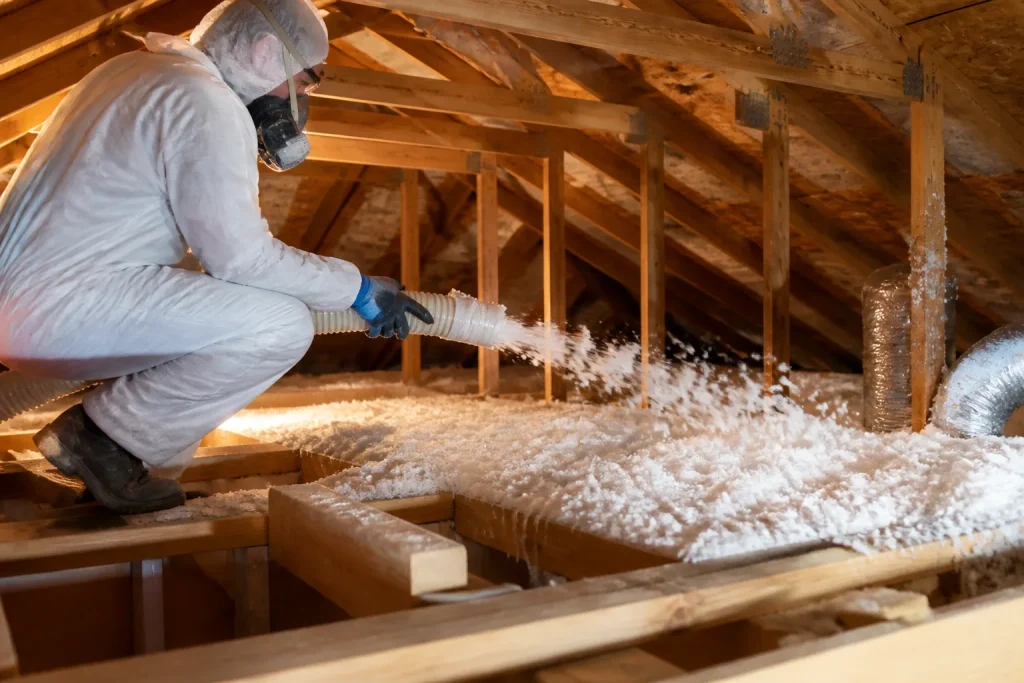
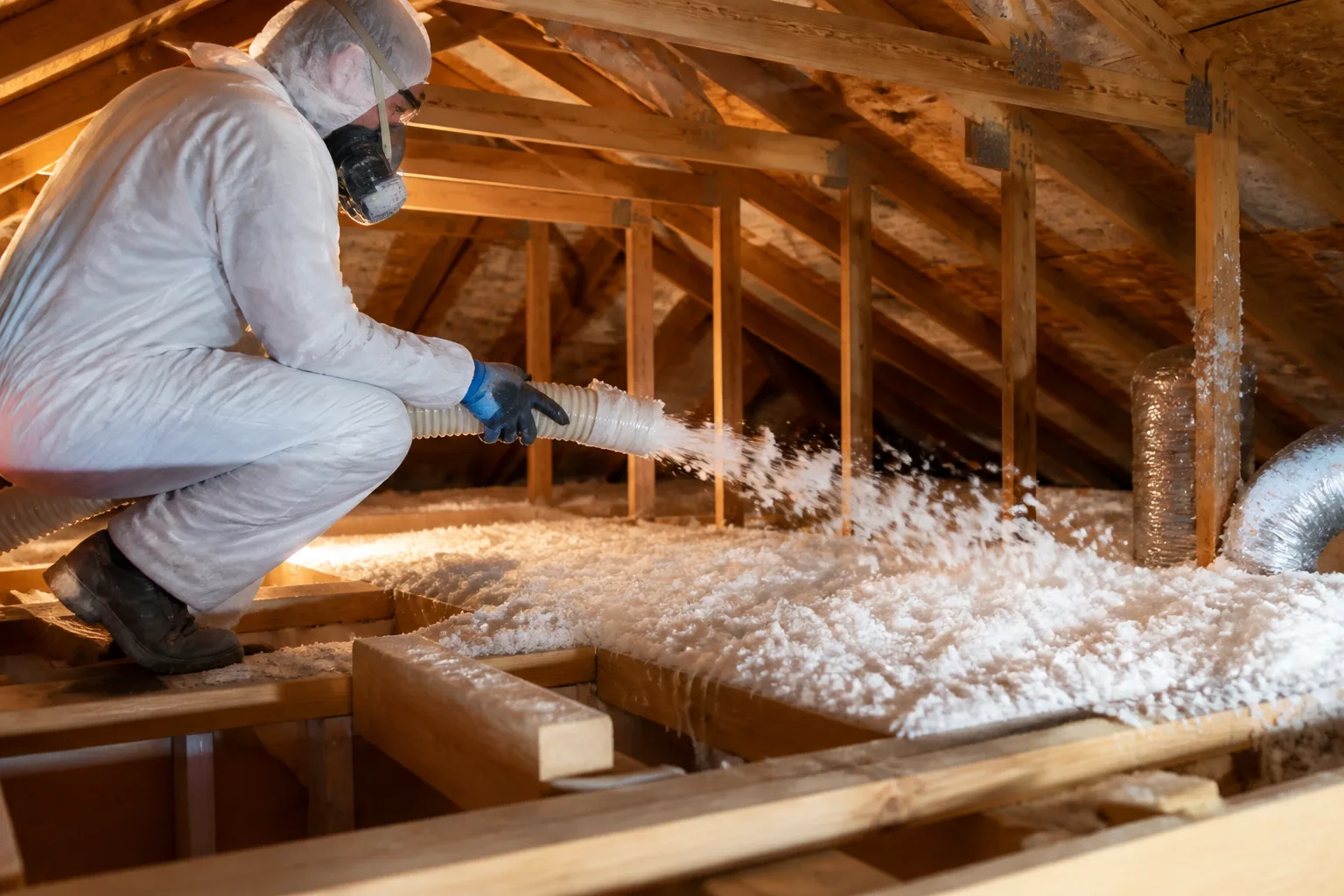
Cellulose blown-in insulation is a different story. Cellulose is shredded paper treated with borates for fire resistance. When it gets saturated, it mats down, loses almost all its R-value, and because it’s organic material, it can support mold growth directly. Water-damaged cellulose in a La Palma attic usually needs to be vacuumed out entirely and replaced, which is where a blown-in insulation specialist with the right equipment matters.
Spray foam is the most water-tolerant of the three. Closed-cell foam, the kind used in high-performance La Palma homes through brands like Demilec, doesn’t absorb water and won’t support mold. Open-cell foam can hold moisture, but it dries out once the leak is fixed, provided there’s airflow. If you have spray foam and a leak, the foam may be salvageable after the leak is repaired and the area dries.
One thing that looks alarming but usually isn’t: old batt insulation that’s darkened or discolored in spots. In attics with years of air movement through the material, fiberglass batts act as an air filter, trapping dust and turning gray or brown. That’s not mold. It’s dust loading, and while it means the insulation is underperforming, it doesn’t require an emergency response.
Pest-Compromised Insulation: Rats in La Palma Attics
Roof rats are a year-round reality in La Palma, and they love attics. Warm in winter, shaded in summer, and usually undisturbed. The damage they do to insulation is threefold: they tunnel through it, they nest in it, and they saturate it with urine and droppings. That combination destroys the insulation’s performance and creates a genuine health hazard.
Here’s the order of operations, and it matters more than most homeowners expect:
- Exclusion first. Seal every entry point: roof-to-wall gaps, eave vents, plumbing penetrations, and any opening larger than a quarter. A rat can fit through a hole the size of a quarter. If the rats aren’t excluded, every dollar spent on new insulation becomes rat bedding within six months.
- Sanitation second. Remove all contaminated insulation, vacuum droppings, and sanitize the attic floor and framing. This is not a pleasant job, and it’s one where proper PPE and an insulation vacuum setup make a real difference.
- Insulation last. Once the attic is sealed, cleaned, and confirmed rat-free, install the right insulation for the space. For La Palma attics recovering from rodent activity, we often recommend Rockwool, which is a mineral wool product. It’s denser than fiberglass, doesn’t hold moisture the same way, and adds a fire-resistance benefit. It’s also less appealing to rodents than loose fiberglass or cellulose, though no insulation is truly rat-proof.
We’ve pulled insulation out of attics in La Palma where the entire blown-in blanket had been tunneled into a maze of rat runs. The homeowner thought they were calling about an energy problem. The real problem was a dozen roof rats that had been living rent-free for a year.
What to Document Before Any Contractor Enters the Attic
Before you let anyone into your attic, take photos. Lots of them. This protects you whether you’re filing an insurance claim, pursuing a home warranty repair, or getting quotes from multiple contractors and comparing what each one says they saw.
Here’s what to document:
- Wide shots of each attic section from the access point, showing the overall condition of the insulation.
- Close-ups of any wet, stained, matted, or moldy areas with something for scale, like a hand or a ruler.
- Visible roof deck or rafter staining that indicates a past or ongoing leak.
- Droppings, nesting material, or gnaw marks if pest activity is suspected.
- The access point itself and any visible vents. Sometimes the problem visible from outside the attic explains what’s happening inside: a disconnected bathroom fan vent, a cracked plumbing boot, or a soffit vent that’s been pulled open.
If you have a humidity meter, take readings at the attic floor and near the roof sheathing. Anything above 60% relative humidity in a La Palma attic during the dry season suggests an active moisture problem. During the summer, attic heat can mask moisture issues because things dry out fast, but stains and mineral deposits left behind will still tell the story. If you have a leak that runs through the ceiling, a moisture meter reading helps establish whether the insulation needs full removal or spot replacement.
Insurance claims for attic damage often hinge on whether the homeowner can show the condition before remediation started. The more photos you have, the harder it is for a claim to be denied on the grounds of “pre-existing condition.”
How to Vet an “Emergency” Insulation Contractor at 7pm on a Saturday
Desperation creates opportunity for bad contractors. When a homeowner is staring at a sagging ceiling or a soaked attic, the temptation is to hire whoever answers the phone first. Here are the three questions to ask before anyone gets on a ladder, whether it’s 7pm on a Saturday or a normal Tuesday afternoon:
Question one: “What’s causing this?” A legitimate insulation specialist starts with diagnosis, not a quote to replace everything. If the contractor can’t or won’t discuss the source of the moisture, the pest entry point, or the ventilation problem, they’re not going to fix anything, they’re going to cover it up. An honest answer is “I don’t know yet, I need to get in the attic and look.” A dishonest answer is “we need to replace all your insulation right now.”
Question two: “What’s the sequence?” A contractor who understands the problem will describe a sequence: stop the water, dry the space, remove the damaged material, treat the structure if needed, then install new insulation. A contractor who skips straight to installation is either inexperienced or unscrupulous. In La Palma, where summer attic temperatures make DIY work genuinely dangerous, the professional sequence matters even more.
Question three: “What brands and materials do you work with, and why those for my attic?” This separates specialists from single-product installers. If the answer is “whatever’s in stock,” proceed with caution. A brand-agnostic shop will tell you what they’d recommend and why, whether that’s Johns Manville fiberglass batts for a straightforward replacement, Knauf for a specific thermal requirement, or CertainTeed for a particular performance tier. You want the contractor who carries multiple options and can explain the recommendation, not the one pushing a single product because it’s what they own.
One more flag: any contractor who pressures you to sign before the attic is inspected should be thanked and sent away. The attic tells the truth. The inspection comes first, always.
When to Call a Pro
If you’ve run through the triage list and you’re seeing active water, visible mold, or extensive rodent contamination, call a professional. This is not a DIY job. Attic work in La Palma during the summer means temperatures that top 140 degrees in the attic, and moving through a contaminated space without proper respirators, gloves, and insulation removal equipment is a health risk. If it’s a water emergency, shut off the water to the affected fixture if you can do so safely, place a bucket or tarp under the leak if accessible, and call a contractor with real attic experience.
In our experience, most “emergency” attic calls turn out to be problems that have been developing for months or years and finally became visible. The homeowner sees a stain on the ceiling and assumes the insulation failed suddenly. What actually happened is a slow leak finally saturated enough material to show through. That’s not an argument against acting fast, it’s an argument for acting correctly: find the source, fix the source, then replace what was destroyed.
Related Services in La Palma
If your attic needs a full insulation replacement after a water or pest event, we handle all three installation methods. Attic insulation in La Palma covers batts, rolls, and full attic replacements. For spray foam applications, including moisture-tolerant closed-cell foam, see spray foam insulation in La Palma. And for blown-in cellulose or fiberglass, including GreenFiber recycled-content options, visit blown-in insulation in La Palma. You can also read more about us at the Cool House Insulation home page.
What happens when you call
- 1
A real person answersNo phone trees — you reach a local pro.
- 2
You get an upfront price rangeHonest numbers before anyone is dispatched.
- 3
A background-checked tech heads outLicensed & insured, dispatched right away.
- 4
You approve before work beginsNothing starts until you say go.
The Bottom Line
An attic insulation emergency in La Palma is almost always a water, pest, or HVAC problem wearing insulation’s clothes. The insulation is the canary, not the coal mine. Document everything, find the source first, and don’t let anyone sell you new insulation before the underlying problem is fixed. If you need a professional assessment, Cool House Insulation serves La Palma and the surrounding area. We carry eight insulation brands including Johns Manville, Knauf, Rockwool, and CertainTeed, which means we can recommend the right material for your specific situation rather than the only one we stock. Estimates are free. Call (855) 341-7810 and we’ll help you figure out what’s actually going on up there.
Frequently Asked Questions
Most emergency attic insulation replacements in La Palma run between $1,500 and $4,500 depending on attic size, material choice, and the extent of removal needed. The insulation replacement itself is usually the smaller line item; the bigger costs come from leak repair, mold remediation, or pest exclusion that has to happen first. Call (855) 341-7810 for a free estimate based on your specific attic.
In most cases, yes, you can stay in the home while moldy attic insulation is being addressed, provided the attic is sealed from the living space and the mold hasn’t spread into the HVAC system. If anyone in the home has respiratory conditions, allergies, or a compromised immune system, consider staying elsewhere during removal. A professional assessment will tell you whether your situation is a stay-put or a temporary-relocation scenario.
Look for tunnels or runways through the insulation surface, droppings on top of or inside the material, gnaw marks on framing or wiring, and dark rub marks along beams and trusses. You may also hear activity at dusk or dawn. If you find any of these, the rats need to be excluded before insulation is replaced, or you’ll be doing this again next year.
A single, brief wetting event that dried quickly is usually not an emergency for fiberglass batts or closed-cell spray foam. Cellulose is more vulnerable because it mats down and loses R-value permanently when saturated. The bigger concern is what got wet along with the insulation: wood framing, drywall, and other organic materials that can grow mold. If the area dried fully within 24 to 48 hours and there’s no staining, you may only need spot replacement. If in doubt, call (855) 341-7810 and we’ll help you assess it.
Written by the team at Cool House Insulation, serving La Palma since 2015.
Need Insulation Help?
Call Cool House Insulation — licensed & insured, here with fast after-hours help in La Palma.
(855) 341-7810