
Demilec Attic Insulation in La Palma: A Homeowner’s Guide
Demilec spray foam is a premium insulation product that shines in specific La Palma attic scenarios, like unvented cathedral ceilings or attics housing HVAC equipment. But for a standard vented attic with an insulated floor, blowing in cellulose or fiberglass usually costs less and performs just as well. If you’d rather skip the deep dive and just talk to someone who installs all of it, call (855) 341-7810 for a free estimate.
Demilec Heatlok and Sealection 500 are genuinely excellent products. But in a standard vented La Palma attic with intact ductwork, installing them instead of blown-in cellulose is like buying a diesel truck to drive to the grocery store. The truck is a great machine. It’s just not the right tool for that job. Knowing which Demilec product actually fits your attic, and when another material makes more sense, is what this guide is about.
When Demilec Actually Makes Sense in a La Palma Attic
Demilec earns its price tag in three specific situations. If your house doesn’t fit one of these, you have cheaper options that’ll do the job.
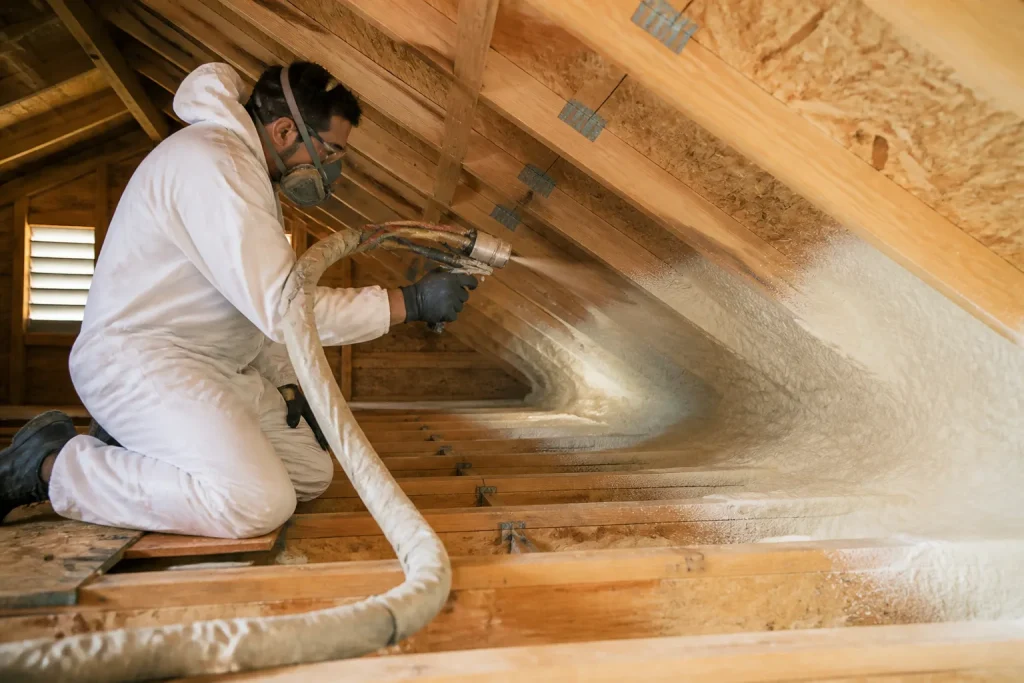
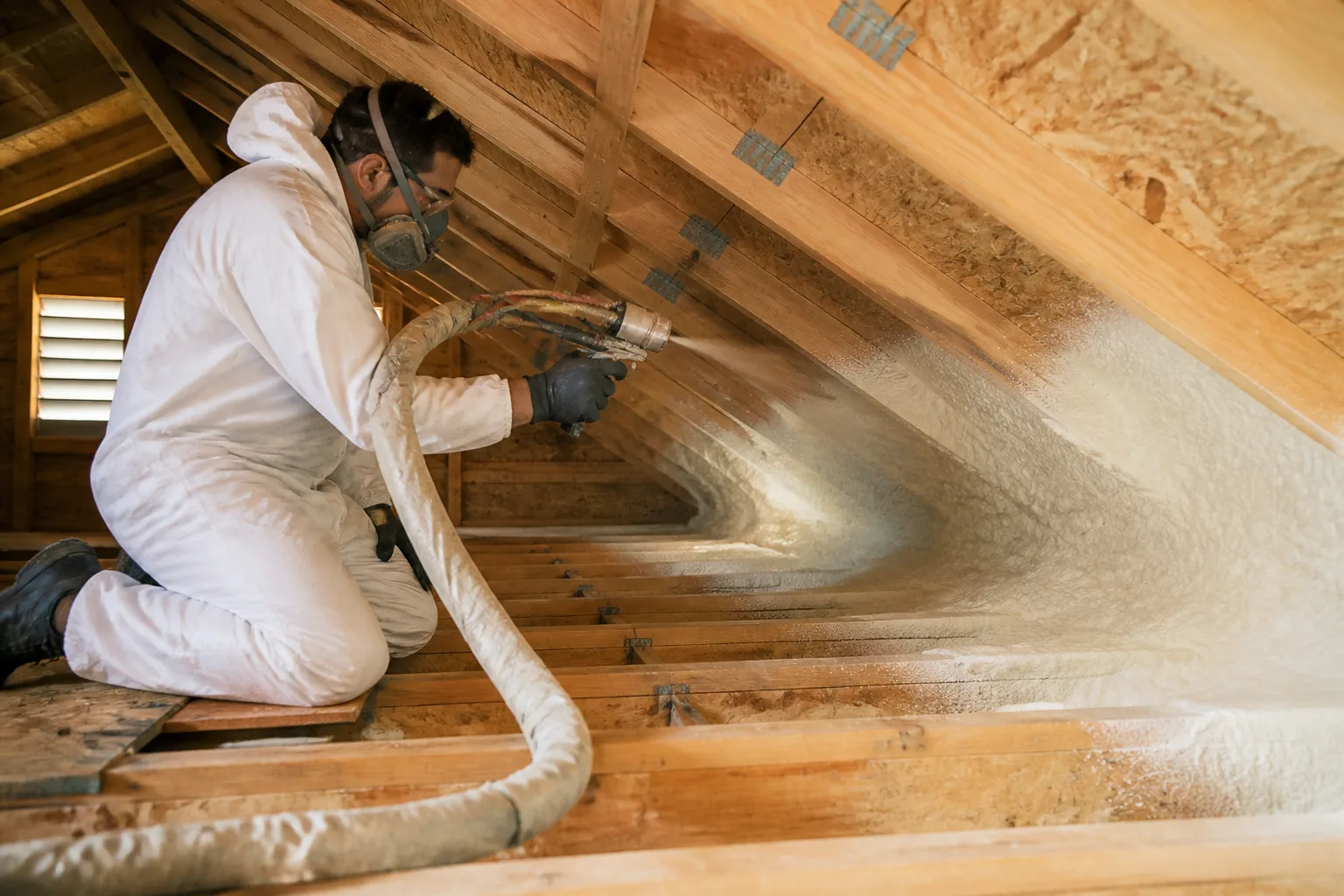
- Unvented cathedral ceilings. If your ceiling follows the roofline and there’s no attic cavity to insulate, spray foam is often the only code-compliant way to hit R-value without tearing out drywall. Open-cell foam fills the rafter bays completely and stops air movement.
- HVAC equipment moved into the attic. La Palma summers push attic temperatures past 130°F. If your air handler and ducts live up there, blowing insulation on the floor does nothing for them. Sealing and insulating the roofline with foam brings that equipment into conditioned space, which cuts cooling costs dramatically.
- Documented air leakage above 10 ACH50. If you’ve had a blower door test and the number came back double digits, spray foam’s air-sealing ability is exactly what you need. Fiberglass and cellulose insulate but don’t seal. Demilec does both in one pass.
In our experience across La Palma, most homes have standard vented attics with the HVAC in a closet or garage. Those homes rarely need Demilec. We’ll say that plainly, because our job is to match the material to the house, not to the sales goal. Attic insulation in La Palma should start with an honest look at what your house actually needs.
Sealection 500 vs. Heatlok: Why the Cheaper Demilec Wins Most La Palma Attics
Demilec makes two main residential products: Sealection 500 (open-cell) and Heatlok HFO (closed-cell). The price difference is meaningful, but so is the performance difference. Here’s the honest breakdown.
- Sealection 500 is roughly R-3.8 per inch. It’s soft, spongy, and air-permeable until it fully cures. It costs less per board foot and is the right Demilec choice for most La Palma residential attics, especially cathedral ceiling retrofits. It allows some vapor transmission, which suits our coastal climate.
- Heatlok HFO runs around R-7 per inch and costs nearly twice as much per board foot. It creates a vapor barrier and adds structural rigidity. You need that in a crawl space or a metal building. You rarely need it in a La Palma attic.
Here’s what the spec sheet won’t tell you: in a 95°F La Palma attic, both products insulate fine, but Heatlok’s higher R-value per inch matters most when you’re space-constrained. If you can only spare four inches of rafter space, closed-cell gets you to R-28. If you have ten inches to work with, open-cell at R-38 wins on price with identical comfort results. We’ve sprayed both, and spray foam insulation in La Palma decisions usually come down to cavity depth and budget, not brand loyalty.
What Demilec Can and Cannot Be Sprayed Over
This is the compatibility question that separates a good foam job from a callback nightmare. Demilec open-cell foam bonds well to clean, dry substrates: plywood decking, OSB, clean drywall, and masonry. But here’s what you need to know before anyone pulls a trigger on a spray rig in your attic.
What’s fine to spray over:
- Bare plywood or OSB roof decking
- Existing open-cell foam (adding thickness for more R-value)
- Clean ceiling drywall from the attic side
What must be removed first:
- Old, dusty blown-in fiberglass or cellulose. Foam sprayed over loose fill doesn’t bond to the decking properly. It’ll peel and sag within a year or two.
- Vermiculite containing asbestos. No foam contractor should ever spray over this. It must be abated by a licensed specialist first.
- Rodent-contaminated insulation. We pulled one out of a garage over in the La Palma Vista community last month where rats had tunneled through the fiberglass for years. Spraying foam over that would’ve sealed in the odor and the health hazard. It all had to come out.
- Moldy or water-damaged materials. Foam doesn’t kill mold. It encases it. And if the roof leaks again, the foam makes the leak harder to find and repair.
When removal is required, that’s a real cost line item. Some contractors won’t mention it until the crew shows up. We’d rather tell you before you sign anything.
Demilec vs. the Rest of the Portfolio: An Honest Comparison
Here’s the thing about being a brand-agnostic insulation company. We carry Demilec and Icynene for spray foam, but we also carry Owens Corning and GreenFiber for blown-in and batt work. Nobody’s paying us to push one over the other. So we can say this plainly:
- For a standard vented attic in La Palma: Blown-in GreenFiber cellulose at R-38 to R-49 costs roughly a third of what Demilec open-cell costs per square foot of attic floor, and the comfort difference on the finished ceiling below is negligible. Cellulose fills the joist bays and settles into a consistent thermal blanket. That’s the honest math for most homes.
- For an attic floor with complex obstacles: Owens Corning blown-in fiberglass or GreenFiber cellulose both handle around recessed lights, cross-bracing, and vent pipes without leaving the gaps that batts create. You get performance similar to foam on the attic floor plane, at a much lower installed cost.
- For a cathedral ceiling with limited rafter depth: Nothing in our portfolio beats Icynene or Demilec closed-cell on R-value per inch. That’s where foam earns its premium.
We’ve talked homeowners out of foam jobs when blown-in would perform identically for less money. It’s not the most profitable conversation in the short term, but in La Palma, where a quarter of the houses on any given street were built in the same era and face the same thermal problems, word gets around. Blown-in insulation in La Palma is the right call more often than most foam-only contractors will admit.
How Demilec’s Spec Sheet Translates to a La Palma Attic in August
Every foam manufacturer publishes R-values measured at 75°F mean temperature in a lab. Your attic in August is not a lab. Here’s what actually happens to Demilec’s numbers when the La Palma sun is doing its thing:
- Open-cell foam’s R-value is stable across realistic attic temperatures. R-3.8 per inch at 75°F is still roughly R-3.7 per inch at 130°F. That’s a strong performance characteristic and one reason we recommend Sealection 500 so often.
- The real advantage of foam in a hot attic isn’t R-value. It’s air sealing. In a vented attic with blown-in insulation, superheated air seeps through every wire penetration, recessed can light, and top plate. That’s convection heat gain, and it’s why rooms over the garage feel ten degrees warmer by 4 PM.
- Humidity is the wildcard. Sealection 500 is vapor-permeable, meaning moisture can migrate through it. In La Palma’s coastal air, that’s usually an advantage. It lets incidental moisture dry instead of trapping it against the roof deck. Closed-cell Heatlok does not let moisture through, which can be a problem if there’s any existing moisture in the decking.
What all this means: for the typical La Palma bungalow or two-story plan with a vented attic, the comfort difference between R-38 blown-in cellulose and R-38 Demilec open-cell on the attic floor is small, but the price difference is large. When air sealing is the goal, foam earns it. When it’s insulation alone, it doesn’t.
When to Call a Pro
Spray foam is not a DIY material. Demilec products are two-component chemical systems that require specialized equipment, precise temperature and humidity control during application, and protective gear for the installers. A bad foam job off-gasses for months, doesn’t cure properly, or shrinks and pulls away from the decking. All three happen more often than the YouTube tutorials suggest.
If you’re dealing with a cathedral ceiling, a furnace in the attic, or a blower door score that’s laughably bad, that’s when you call someone who sprays foam every week, not someone who bought a kit online. We’ve re-sprayed more than a few DIY attempts, and the fix always costs more than the original professional job would have.
If you’re in La Palma and want to know which direction actually fits your house, check out our Cool House Insulation home page or give us a call. Estimates are free and the recommendation is based on your attic, not our inventory sheet.
The Bottom Line
Demilec makes excellent foam. Sealection 500 is our most-recommended Demilec product for La Palma residential attics because open-cell suits our climate, and their closed-cell Heatlok is outstanding when space is tight or code demands it. But if you have a standard vented attic with the ductwork in the floor plane, you’re likely better served by blown-in insulation at a fraction of the cost.
The right insulation is the one that matches your home’s architecture, your budget, and your comfort goals, not the one any single-brand contractor happens to carry. That’s the whole point of working with a company that installs eight brands and three methods. If you’re in La Palma and want a straight answer about your attic, call (855) 341-7810 for a free estimate. We’ll tell you what we’d do if it were our house.
Frequently Asked Questions
Open-cell Sealection 500 typically runs $2.50 to $4.00 per square foot installed at attic roof deck depth, while closed-cell Heatlok runs $4.00 to $6.50 per square foot. Blown-in insulation on an attic floor by comparison typically runs $1.00 to $2.00 per square foot. Call (855) 341-7810 for an exact quote on your attic, estimates are free.
Usually not. For a vented attic with the insulation on the floor, blown-in cellulose or fiberglass delivers similar comfort results at roughly a third of the cost. Demilec earns its premium when you’re sealing a cathedral ceiling, insulating around attic HVAC equipment, or fixing severe air leakage above 10 ACH50.
No, not over loose fill or batt insulation. Demilec bonds only to clean, solid surfaces like bare roof decking, drywall, or existing cured foam. Old blown-in fiberglass, contaminated insulation, and vermiculite must be removed before foam can be applied. A reputable installer will inspect first and tell you what needs to go.
Open-cell (Sealection 500) is about R-3.8 per inch, vapor-permeable, softer, and less expensive. Closed-cell (Heatlok HFO) is about R-7 per inch, creates a vapor barrier, adds stiffness, and costs roughly twice as much. For most La Palma residential attics, open-cell is the right Demilec product because our coastal climate favors vapor permeability, and the R-value difference rarely matters when you have standard rafter depth.
Written by the team at Cool House Insulation, serving La Palma since 2015.
Need Insulation Help?
Call Cool House Insulation — licensed & insured, here with fast after-hours help in La Palma.
(855) 341-7810