Fast, Reliable Attic Insulation Across Koreatown
Attic insulation in Koreatown usually means working with 1920s bungalows, duplexes, and 1960s stucco apartment buildings that were never properly insulated to begin with. Most homes in the 90005 ZIP have vented attics with recessed can lights that leak conditioned air, and a lot of them have had questionable handyman work done over the years. Our Attic Insulation crews know these buildings because we work in them every week. Call (855) 341-7810 for a free estimate, and we’ll tell you exactly what your attic needs and what it will cost.
Why Cool House Insulation Is Koreatown’s Preferred Attic Insulation Company
We’re not tied to one manufacturer’s product line. That matters in Koreatown because the right material for a 1928 bungalow near Wilshire and Western isn’t necessarily the right material for a 1972 dingbat off Beverly Boulevard. We pull from eight major brands – Owens Corning, Johns Manville, Knauf, Rockwool, CertainTeed, Icynene, Demilec, and GreenFiber – and match the insulation to the home, not the other way around. Noel Carrasco built this company on that approach, and it’s why Koreatown homeowners and property managers keep calling us back.
We know the blocks, the building types, and the problem spots. Response time to Koreatown from our La Palma base runs fast, and we schedule around your availability, not ours. When you call, you get a straight answer about whether blown-in fiberglass, mineral wool batts, or spray foam makes sense for your specific roof deck and wiring situation.
Attic Cleaning Services in Koreatown
Attic Cleaning Services in Koreatown are often the first step before any insulation work can happen. A lot of the attics we open up in 90005 haven’t been touched in decades – layers of dust, old rodent activity, crumbling batt fragments, and the occasional live-and-abandoned knob-and-tube wiring. You can’t just fluff new insulation over that. The old material traps moisture against the ceiling plane, and the mess hides air leaks that will keep costing you money.
In Koreatown, a standard attic cleaning runs $900 – $1,800 for a typical bungalow or duplex attic, depending on square footage, access height, and how much loose debris has to be bagged and removed. Larger apartment buildings with shared attic spaces run higher. We remove the old insulation by hand or with a commercial vacuum, sanitize the deck, inspect for moisture damage, and prep the space for new material. The whole job usually takes one to two days.
What We Remove and Why It Matters
Old fiberglass batts break down into fine particles that migrate into your living space through can-light gaps and wall penetrations. That’s dust you breathe, not just dust you see. We also remove old blown-in cellulose that’s been compressed by foot traffic from cable installers and HVAC techs – compressed insulation loses its R-value and stops doing its job.
Access and Setup in Tight Koreatown Attics
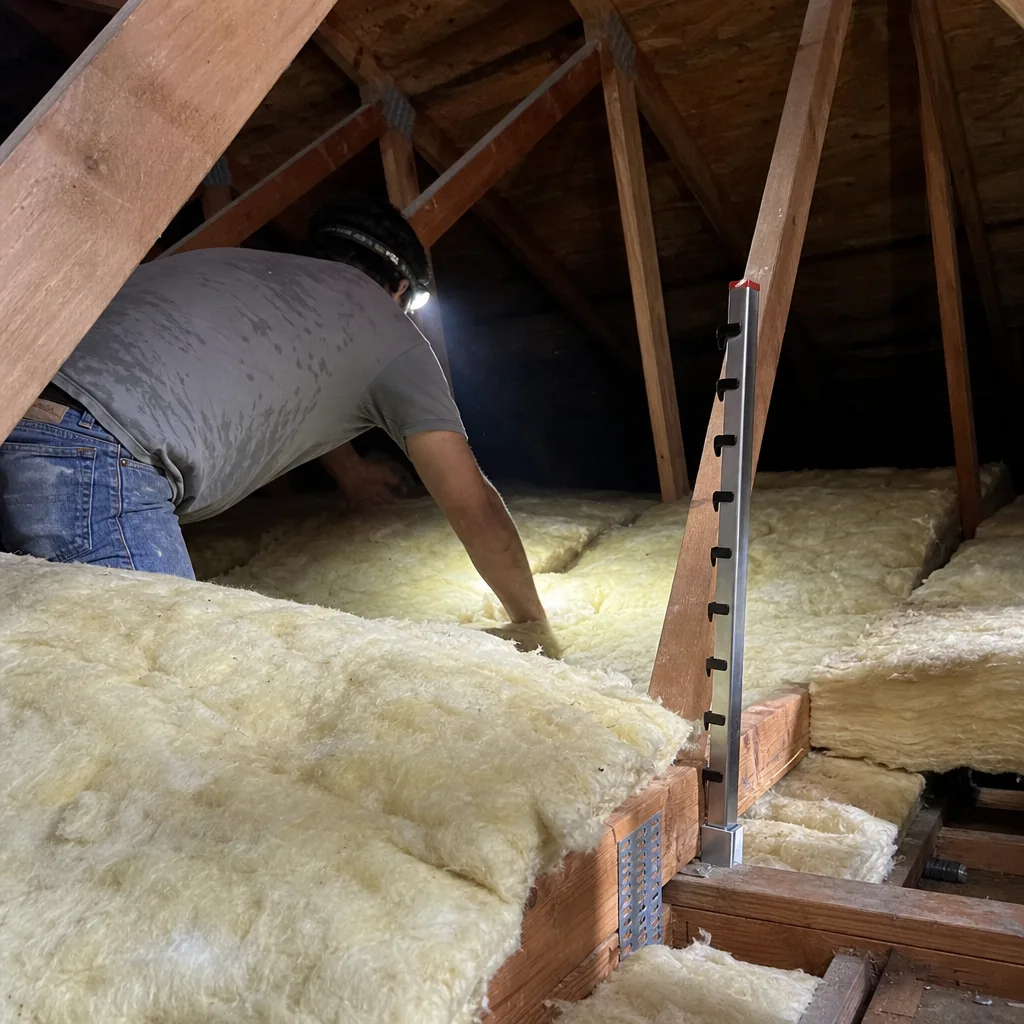
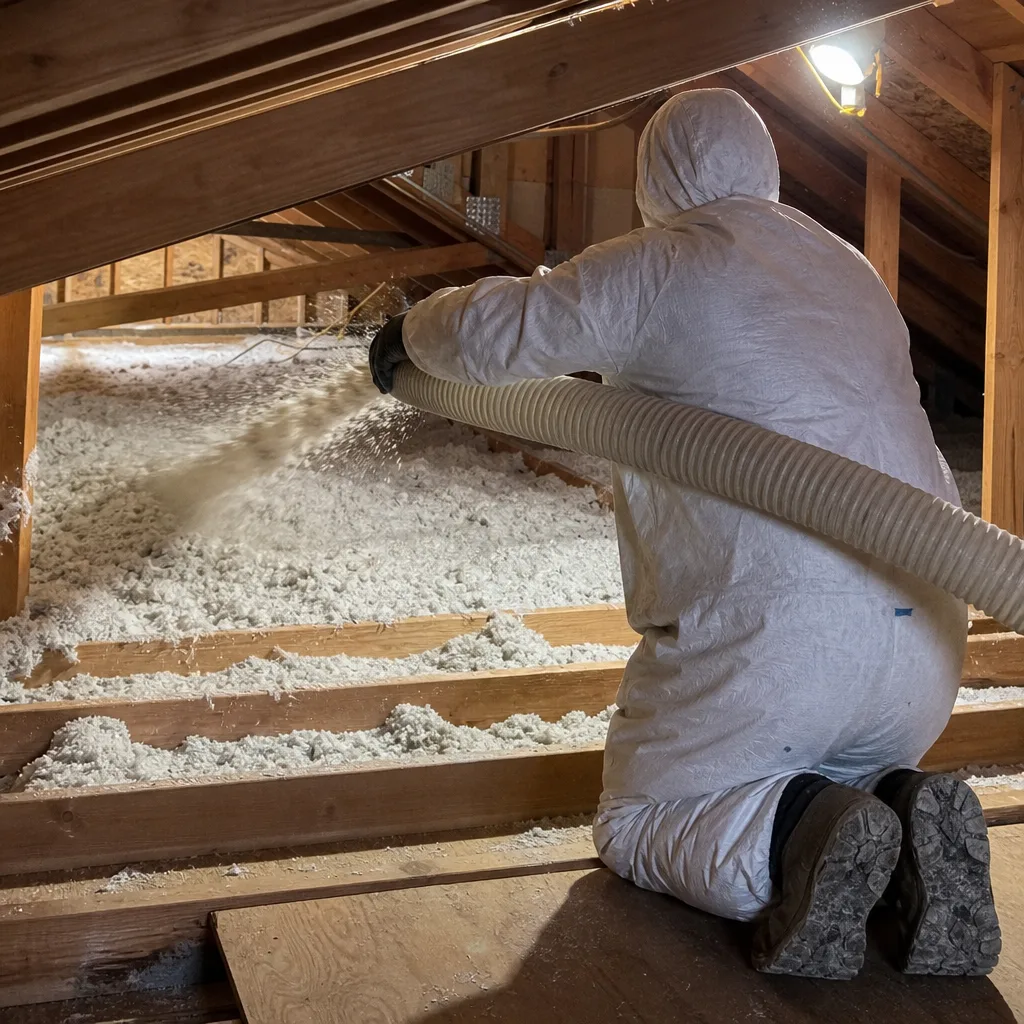
Koreatown attics are tight. Scuttle holes in hallway closets, low-pitched roofs, and beams spaced for 1920s framing, not modern code. Our crew works around it. We use drop cloths through the living space, seal off the work area, and keep dust out of your kitchen. You won’t come home to a film on everything.
What happens when you call
- 1
A real person answersNo phone trees — you reach a local pro.
- 2
You get an upfront price rangeHonest numbers before anyone is dispatched.
- 3
A background-checked tech heads outLicensed & insured, dispatched right away.
- 4
You approve before work beginsNothing starts until you say go.
Attic Mold Removal in Koreatown
Attic Mold Removal in Koreatown is a repair we do more often than most people expect, and the cause is almost always the same: covered vents and trapped moisture. When a previous handyman stuffed fiberglass batts over the eave vents, the attic stops breathing. Winter rains bring humidity, warm air from the living space rises through can-light gaps, and condensation forms on the roof sheathing. Mold follows. It’s a pattern we see constantly in the 1920s and 1930s homes around Shatto Place and the streets west of Vermont.
Mold remediation in a Koreatown attic typically runs $1,200 – $2,500, depending on colony size, sheathing damage, and whether the roof deck needs spot treatment or full replacement. We treat the affected wood with an antimicrobial, remove the moisture source by restoring proper venting, and then insulate correctly so the problem doesn’t return. The mold work and the insulation work have to happen together or you’re wasting money.
Moisture Mapping Before We Treat
Before we spray anything, we map where moisture is entering. That means checking every eave vent, the bathroom fan terminations, the can-light housings, and any plumbing stacks that penetrate the attic floor. If we just kill mold and leave the vent blocked, you’ll have the same problem next winter. We fix the cause, then treat the symptom.
Post-Remediation Insulation Guidance
After mold removal, the question is what goes back in. For Koreatown attics with recessed lights and older wiring, we often recommend Rockwool mineral wool. It’s moisture-resistant, it doesn’t feed mold, and it carries a Class A fire rating, which matters when you have knob-and-tube or early Romex in the walls below. For deeper attics with good access, blown-in GreenFiber or Owens Corning fiberglass performs well and costs less per square foot.
Trusted Brands We Service in Koreatown
Because we install insulation from eight manufacturers, we’re not going to pitch you the one product we happen to carry. For Koreatown attics with recessed lights and vent-blocking history, Rockwool batts are often the right call for their fire resistance and moisture tolerance. For open attics with good venting, CertainTeed blown-in fiberglass gives excellent coverage per dollar. For complex rooflines and hard-to-reach spaces, Icynene or Demilec spray foam seals the envelope completely. We stock and service all of these, and we’ll show you the R-value math before we quote.
Common Attic Insulation Problems We See in Koreatown Homes
- Blocked eave vents from previous handyman work. Someone shoved batts into the soffit area to “stop drafts,” and now the attic can’t breathe. Moisture builds during winter rains, and you get mold on the roof deck, rusted can housings, and peeling ceiling paint below.
- Recessed can lights leaking conditioned air. Those old 6-inch and 8-inch cans from the 1980s renovation era have no airtight seal. They pump heated or cooled air straight into the attic all year, and they’re the main reason your upstairs bedrooms never hold temperature.
- Knob-and-tube and early Romex wiring conflicts. Piling insulation over old wiring can create a fire hazard if the insulation prevents heat dissipation. We check the wiring condition first and adjust the material and method around it. Sometimes that means batting to one side of a run, sometimes it means an electrician consult first.
- Urban heat-island attic baking. Koreatown’s dense, low-albedo roofs and minimal tree canopy push attic temps well over 120°F in summer. Without a proper thermal barrier and radiant control, your AC runs hours longer every day, and the heat radiates down through the ceiling for hours after sunset.
Pricing for Attic Insulation in Koreatown, CA
A standard attic insulation job in Koreatown – remove old material, air-seal penetrations, and install new batts or blown-in – typically runs $1,800 – $4,200 for a bungalow or duplex. Attic insulation top-up jobs, where existing insulation is still functional and you just add R-value, run $0.90 – $1.60 per square foot for blown-in fiberglass. Full replacement with Rockwool batts runs higher, usually $2.50 – $3.80 per square foot installed. Spray foam in complex Koreatown rooflines starts around $3,000 for a small attic and climbs from there. The biggest variables are attic access, how much old material has to come out, and whether baffles need to be installed around the eave vents. Call (855) 341-7810 and we’ll give you a fixed quote, not a range you’ll find out was optimistic.
We Also Serve Cities Near Koreatown
Our Attic Insulation in Koreatown crews also cover Los Angeles, Echo Park, Silver Lake, and View Park-Windsor Hills. Whether you’re in a hillside bungalow above Silver Lake or a duplex near Larchmont, the housing stock and the heat-island problems are the same. We schedule runs through Koreatown and the surrounding neighborhoods weekly.
Serving Koreatown, CA — Our Local Coverage Area
We’re based in the Koreatown area and know this community well. Use the map below to see our service coverage — if you’re nearby, we can almost certainly help.
FAQs About Attic Insulation in Koreatown
Koreatown runs noticeably hotter than Santa Monica or Venice on any summer afternoon – low-80s to low-90s outside means 120°F-plus in an uninsulated attic, and that heat radiates into your living space for hours after the sun sets. Coastal LA homes can often get by with moderate R-value insulation. Koreatown homes need a higher effective R-value plus attention to radiant heat transfer because the roof deck itself becomes a radiator. For most 90005 attics we recommend R-38 to R-49, and we check whether a radiant barrier makes sense for your roof pitch and orientation. Call (855) 341-7810 and we’ll assess your specific attic, for free.
Yes, and you should. Recessed can lights are the single biggest air leak in older Koreatown bungalows – they let conditioned air pour into the attic all year. We install airtight covers over the can housings from the attic side, then insulate over them without creating a fire risk. The process is standard for us, but it has to happen before new insulation goes in. If someone quotes you insulation without asking about your can lights, that’s a red flag.
Covered vents are the usual cause. When batts get stuffed over the eave vents, the attic can’t exchange moisture, and warm humid air from the house condenses on the cold roof sheathing during winter rains. If your attic has a musty smell or you see dark staining on the wood, call us at (855) 341-7810. Mold removal in Koreatown runs $1,200 – $2,500, but catching it early before it spreads to the framing keeps you at the low end.
Rockwool mineral wool is our default recommendation for attics over knob-and-tube or early Romex wiring. It’s non-combustible, it carries a Class A fire rating, and it doesn’t create the same heat-dissipation concerns as fiberglass packed tight around old wiring. CertainTeed fiberglass can work if the wiring is intact and we keep the insulation clear of active runs. We’ll inspect the wiring condition before recommending any material – if it’s compromised, you’ll need an electrician involved first.
Rooms that run 5-10 degrees different from each other, a second floor that never cools in summer, ceiling paint cracking around your can lights, and musty air when you open the attic hatch are all signs. In Koreatown, we also look for rust on the can housings and dark staining on the roof sheathing – both indicate moisture problems that insulation alone won’t fix. If you’re not sure, call (855) 341-7810 and we’ll do a free attic inspection and tell you exactly what’s going on.
Contact Cool House Insulation today at (855) 341-7810 for attic insulation in Koreatown. Free estimates, straight answers, and the right material for your home – not the only one we carry.
Written by Noel Carrasco, Owner at Cool House Insulation, serving Koreatown and greater Los Angeles.