Fast, Reliable Attic Insulation Across South San Jose Hills
Attic insulation in South San Jose Hills is, more often than not, a full removal-and-rebuild job, not a simple top-up. The homes here were mostly built between the 1950s and 1970s, well before California’s Title 24 energy standards, and many still carry their original R-7 to R-11 batts. Those legacy batts have been cooking under foothill sun and Santa Ana winds for half a century. They’re compressed, dust-loaded, and doing almost nothing to stop August heat from bleeding into your living space. We know this because we’ve opened hundreds of attics in the 91792 ZIP and seen the same failure every time. If your cooling bill climbs every summer and your upstairs rooms never match the thermostat, you’re likely running on insulation that gave up years ago. Call us at (855) 341-7810 and we’ll tell you exactly what’s up there and what it’ll take to fix it.
Why Cool House Insulation Is South San Jose Hills’s Preferred Attic Insulation Company
We’re not tied to one manufacturer, and that matters more in South San Jose Hills than in most places. The housing stock here demands a specific diagnosis before any product gets chosen. A 1965 ranch on a ridge street needs a different insulation strategy than a 1980s split-level down by the valley floor. Our crew works with eight insulation brands, including Owens Corning, Johns Manville, CertainTeed, and Rockwool, so the recommendation comes from what your attic actually needs, not from what we happen to carry on the truck.
Homeowners in South San Jose Hills call us because we speak the language of this specific housing stock. We know what a pre-Title 24 attic looks like before we even open the hatch. We know where the uninsulated additions and converted garages hide thermal gaps. And we know how the hill terrain changes the math: ridge streets catch more solar gain, Santa Ana winds scour loose fill, and the August attic heat here runs hotter than the flat-land cities just south of the hills. Our Attic Insulation team has built its reputation in this ZIP by treating every attic as a diagnosis case, not a product pitch.
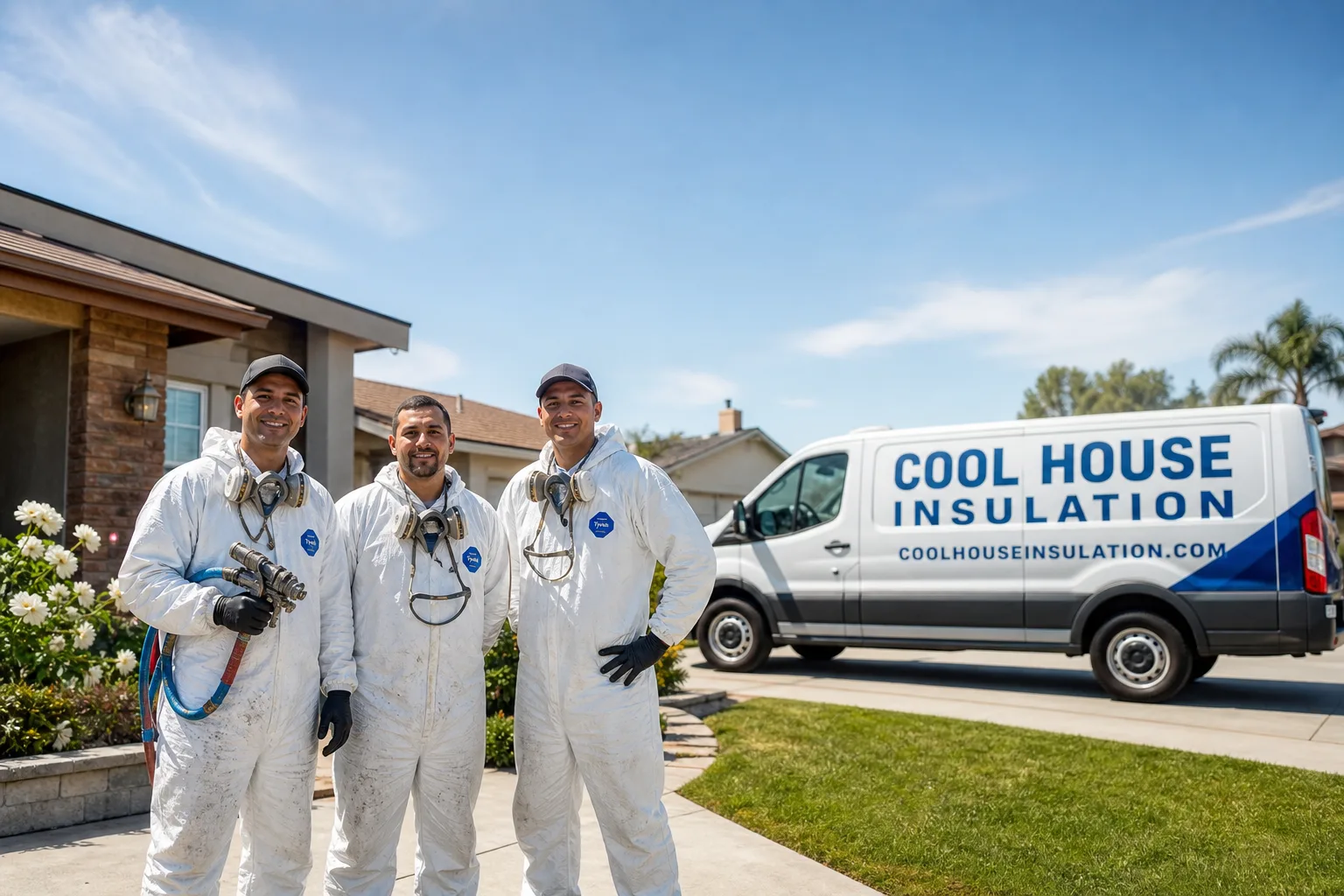
Noel Carrasco leads our crews, and he’s the one who set the standard for how we work in South San Jose Hills. Show up on time, inspect thoroughly, recommend only what the house needs, and leave the ceiling performing measurably better than it did. That approach has earned us a strong local reputation from Valinda to Rowland Heights, and it’s why homeowners here trust us with full removal-and-rebuild retrofits rather than quick layer-over jobs.
Attic Insulation Removal in South San Jose Hills
Attic Insulation Removal in South San Jose Hills is the starting point for most retrofits on this housing stock, because topping up a failed legacy batt means burying the problem instead of fixing it. The job involves vacuuming out the old, compressed fiberglass, hauling it away, inspecting the ceiling plane for gaps and air leaks, and prepping the attic for new insulation that actually meets modern performance. A typical removal in the 91792 ZIP runs $1.20 to $2.00 per square foot, depending on access, depth, and whether rodent or dust contamination has spread through the existing material. For a 1,200-square-foot attic, that usually lands between $1,400 and $2,400 before new insulation goes in.
Full Removal vs. Layering Over
Layering new insulation over old, failed batts is cheaper up front, but in South San Jose Hills it’s the wrong call almost every time. The original R-7 to R-11 material in these 1960s ranches is compressed and dust-loaded, which means it no longer holds air pockets, and air pockets are what do the insulating. Blowing new fiber over the top flattens the old layer further and leaves air leaks at top plates and can lights untouched. Full removal lets us see the ceiling plane directly and seal what needs sealing.
What Removal Day Looks Like
When our crew arrives in South San Jose Hills, we run a vacuum hose through the attic access, contain the dust, and pull the old material out in a few hours for most single-story ranches. Then we inspect. In this housing stock, we typically find gaps around wiring penetrations, unsealed top plates, and ceiling can lights that have been venting conditioned air into the attic for decades. Sealing those before new insulation goes in is the difference between a retrofit that works and one that looks good but still leaves hot rooms in August.
Insulation Contractors in South San Jose Hills
Insulation Contractors in South San Jose Hills fall into two camps: single-brand installers who push one product regardless of the house, and specialists who diagnose first and match the material to the home. We’re the second kind. A ranch off the ridge streets with a converted garage needs a different thermal strategy than a two-story with a standard attic over the whole footprint. That’s why we carry eight brands and three installation methods under one roof: batt insulation, blown-in fiberglass or cellulose, and spray foam for the areas where air-sealing is the primary concern. A typical attic insulation project in South San Jose Hills runs $3,200 to $6,800 for a full removal, air-sealing, and new blown-in installation, with spray foam upgrades running higher depending on square footage and foam type.
Removal-First Specialty
Most contractors in the San Gabriel Valley will happily blow new fiber over old, failed material and call the job done. We won’t do that in South San Jose Hills, because we’ve seen too many attics where a layered-over retrofit still left the master bedroom ten degrees warmer than the rest of the house. The removal-first approach isn’t a sales tactic; it’s the only way to verify what’s actually happening at the ceiling plane in homes this age.
Retrofit Guidance for Older Homes
When a South San Jose Hills homeowner asks whether to retrofit or patch, we look at three things: the condition of the existing batt, the presence of uninsulated additions, and whether the attic has been air-sealed. If the batt is original and compressed, retrofit. If there’s a converted garage with bare drywall against the sun, that bay needs attention in the same visit. Patchwork only makes sense when the insulation is recent, intact, and simply needs a section topped up.
Trusted Brands We Service in South San Jose Hills
We install what performs best in South San Jose Hills, and that means pulling from a portfolio built around three methods and eight manufacturers. For blown-in fiberglass retrofits, we run Owens Corning and Johns Manville; for batts with higher density and acoustic control, CertainTeed and Rockwool. For open- and closed-cell spray foam, we install Icynene and Demilec, two of the most respected names in foam performance. GreenFiber cellulose is available for homeowners in the 91792 ZIP who want recycled-content insulation with strong air-sealing characteristics. Because we’re brand-agnostic rather than locked to one label, the recommendation always follows the diagnosis. Our trucks are stocked with local parts and materials, so most South San Jose Hills lead times run just a few days from estimate to install.
Common Attic Insulation Problems We See in South San Jose Hills Homes
- Legacy R-7 to R-11 batts failing before cooling season peaks. Original 1960s insulation in this ZIP is routinely compressed flat under decades of dust, heat cycling, and occasional foot traffic. By August, it’s a heat blanket in reverse, letting attic heat pour into rooms that the AC can’t keep up with.
- Uninsulated additions and converted garages creating thermal gaps. The original attic insulation doesn’t cover spaces that were added later or garages someone converted to living area. Those gaps leave rooms that never cool evenly, regardless of how much new insulation goes over the main attic.
- Ridge-street solar gain overheating attic assemblies. Homes on the hill’s ridge streets take direct sun on the roof plane for more hours than the valley floor gets. That sustained solar load pushes attic temperatures well past the inland average and degrades radiant surfaces and batt performance faster.
- Santa Ana winds scouring loose fill and thinning coverage. The hill terrain channels wind through attic venting in ways the flat-land cities to the south don’t experience. Blown-in insulation gets shifted, leaving thin spots where heat gains the easiest path into the house.
Pricing for Attic Insulation in South San Jose Hills, CA
Because most jobs in this ZIP start with removal, South San Jose Hills pricing skews slightly higher than flat-land cities where top-ups are more common. A full attic insulation removal in South San Jose Hills typically runs $1,400 to $2,400 for a standard 1,200-square-foot ranch, with new blown-in fiberglass installation adding another $2,000 to $3,500 depending on target R-value. Air-sealing the ceiling plane before new insulation goes in usually adds $400 to $900. Spray foam projects, often chosen for uninsulated additions or converted garages, run $3.50 to $7.00 per board foot depending on open- or closed-cell and depth. The specific number for your attic depends on square footage, access difficulty, and how much sealing is needed, but those ranges hold for most homes we see in South San Jose Hills. Call (855) 341-7810 for a free estimate, and we’ll give you a precise number after a one-hour inspection.
We Also Serve Cities Near South San Jose Hills
Our crews work throughout South San Jose Hills and the surrounding communities. We handle insulation projects in Valinda, Walnut, West Covina, and Rowland Heights on a regular basis. If you’re in one of those neighborhoods and dealing with the same pre-Title 24 housing stock, the same diagnosis-first approach applies. Call us and we’ll schedule an inspection wherever you are in the area.
Serving South San Jose Hills, CA — Our Local Coverage Area
We’re based in the South San Jose Hills area and know this community well. Use the map below to see our service coverage — if you’re nearby, we can almost certainly help.
FAQs About Attic Insulation in South San Jose Hills
Because the original R-7 to R-11 batts installed in the 1950s through 1970s are still sitting in most of these attics, and they’re compressed, dust-fouled, and no longer holding air pockets. Topping up over failed material leaves the air leaks and thermal gaps untouched. Full removal lets us inspect the ceiling plane directly and seal top plates, can lights, and wiring penetrations before new insulation goes in. That’s the only way to get real performance in a 1960s ranch in South San Jose Hills. Call (855) 341-7810 for an inspection and a clear recommendation.
Yes, and it should be. The converted garage is a thermal gap that no amount of main-attic insulation can cover. We handle the garage walls or ceiling in the same visit as the attic retrofit, using the method that fits: spray foam for tight air-sealing in enclosed cavities, or blown-in fiber for open attic space over the garage. Leaving the garage untouched means the room above or beside it will always run warmer than the rest of the house.
It does. Ridge streets in South San Jose Hills take more direct solar gain than the flat-land cities to the south, which pushes attic temperatures higher and degrades batt and radiant materials faster. Santa Ana winds move through attic venting and can shift loose fill, thinning coverage in specific areas. That’s why we inspect wind-facing vents and ridge exposure as part of every South San Jose Hills diagnosis. These aren’t boilerplate factors; they change how we spec a retrofit.
We install from an eight-brand portfolio that includes Owens Corning, Johns Manville, CertainTeed, and Rockwool for batts and blown-in fiber, Icynene and Demilec for spray foam, and GreenFiber for recycled-content cellulose. The brand we recommend for your specific attic depends on what the inspection finds: not every home needs spray foam, and not every home should get a cheap fiberglass layer-over. That’s the brand-agnostic approach we built our South San Jose Hills reputation on. Call (855) 341-7810 and we’ll tell you what your attic actually needs.
Yes, because the insulation fails continuously, not just when you’re home. A South San Jose Hills home with original R-7 to R-11 batts is losing cool air to the attic every hour the AC runs, and the attic heat is radiating into the house even when you’re away. If the house is empty, the insulation still determines whether the structure cycles through extreme heat and whether the AC works less efficiently when it runs. A full retrofit pays off on the cooling bill whether you’re in the house ten months or three. For a precise payback calculation on your specific home, call (855) 341-7810.
Written by Noel Carrasco, Owner at Cool House Insulation, serving South San Jose Hills and the surrounding San Gabriel Valley communities.